Answer to the Fable of the Bees
FIDDES, Richard.
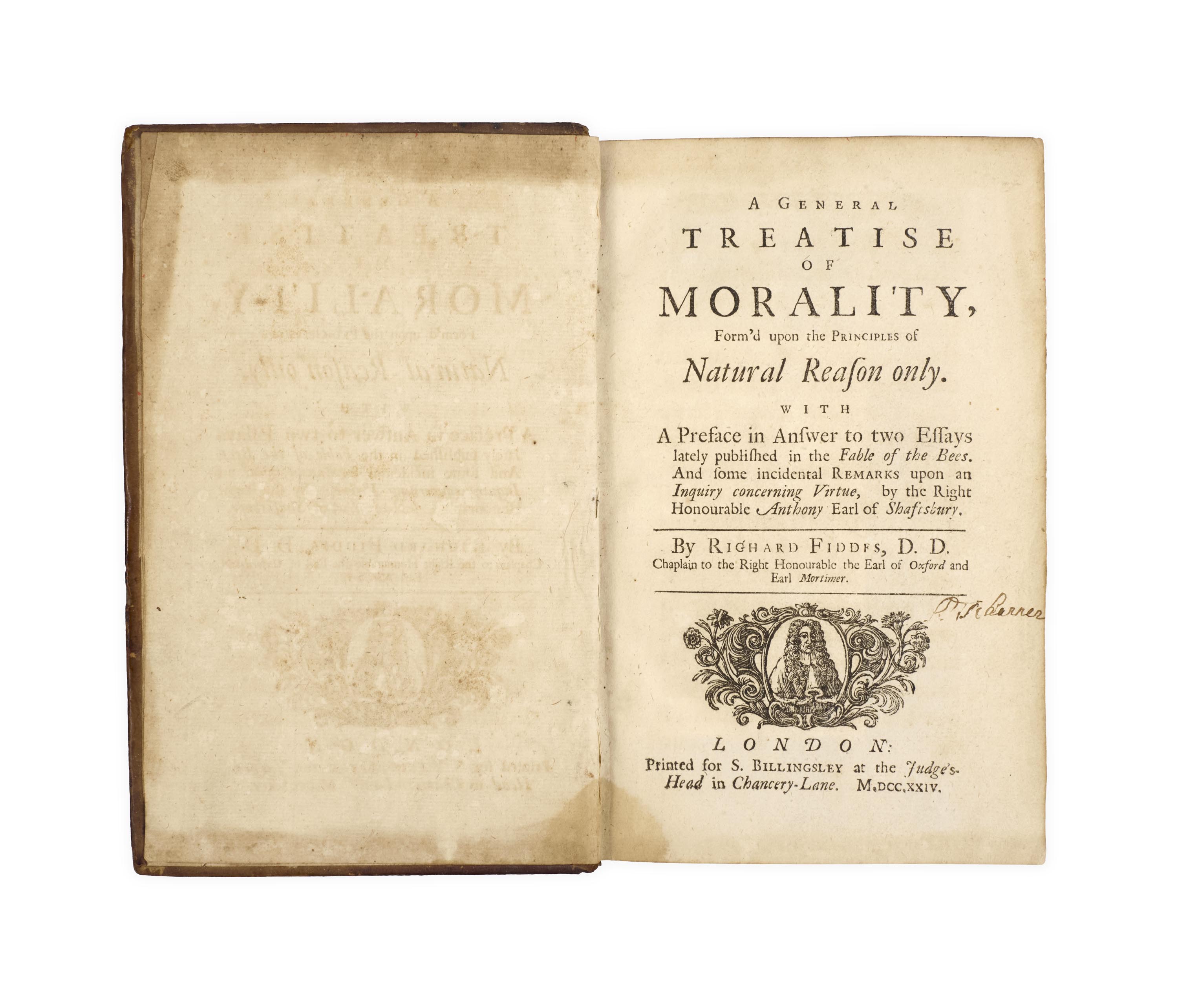
A General Treatise of Morality, form’d upon the Principles of natural Reason only. With a Preface in Answer to two Essays lately published in the Fable of the Bees. And some incidental Remarks upon an Inquiry concerning Virtue, by the Right Honourable Anthony Earl of Shaftsbury … London, S. Billingsley, 1724.
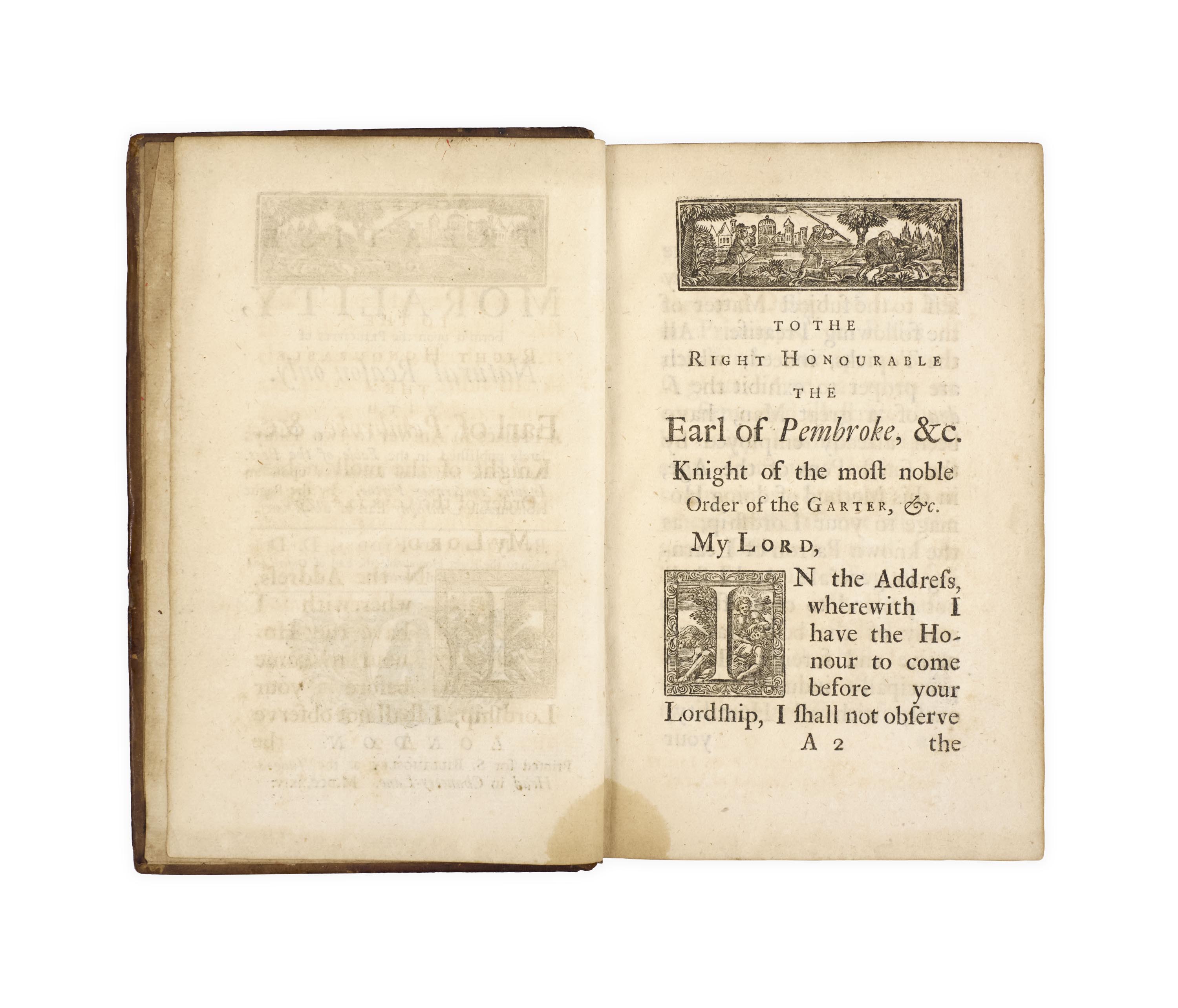
8vo, pp. [10], cxxviii, ‘cxxxix–cxliv’ [i.e. cxxix–cxxxiv], [2], 462; woodcut portrait vignette to title, woodcut initials and ornaments; small marginal damp-stain to lower inner corner of first leaves, some slight spotting, but generally a very good copy; contemporary Cambridge-panelled calf, spine chipped at head and foot with cracks to joints, lettering-piece lost from spine; modern private collector’s bookplate to front pastedown.
Added to your basket:
A General Treatise of Morality, form’d upon the Principles of natural Reason only. With a Preface in Answer to two Essays lately published in the Fable of the Bees. And some incidental Remarks upon an Inquiry concerning Virtue, by the Right Honourable Anthony Earl of Shaftsbury …
First edition, with the misprint ‘Fiddfs’ in the author’s name on the title.
‘Written against Shaftesbury’s Inquiry Concerning Virtue and Mandeville’s Fable of the Bees, and displaying marked sympathy with the works of Malebranche and [John] Norris of Bemerton, this book was a notable defence of revelation against the claims of natural religion’ (ODNB). The substantial ‘Preface’ (144 pages) answers Shaftesbury and Mandeville, while the remainder of the text attempts to ‘state the Principles of Morality … [and] to resolve them into their distinct and proper Grounds’.
Fiddes was a learned divine who formed valuable connections with the Tories (he came briefly to Swift’s attention in 1713), and was appointed chaplain to Robert Harley, Earl of Oxford. His absent-minded commitment to scholarship apparently once led him to be locked in the Bodleian overnight; although, as he was remembered at University College as ‘a hard drinker’, perhaps there were other reasons.
ESTC T75311; Kaye II, p. 406; Kress S.1600.