Unpublished Letters and a Typescript
FORSTER, E. M.
Small archive of correspondence sent to Hazel Eardley-Wilmot and related papers. Britain, 1943–1970.
Eleven signed letters and cards (of which seven autograph), one typescript with manuscript corrections, one printed card, two envelopes (of which one with autograph note), and two printed programmes; all in very good or excellent condition.
Added to your basket:
Small archive of correspondence sent to Hazel Eardley-Wilmot and related papers.
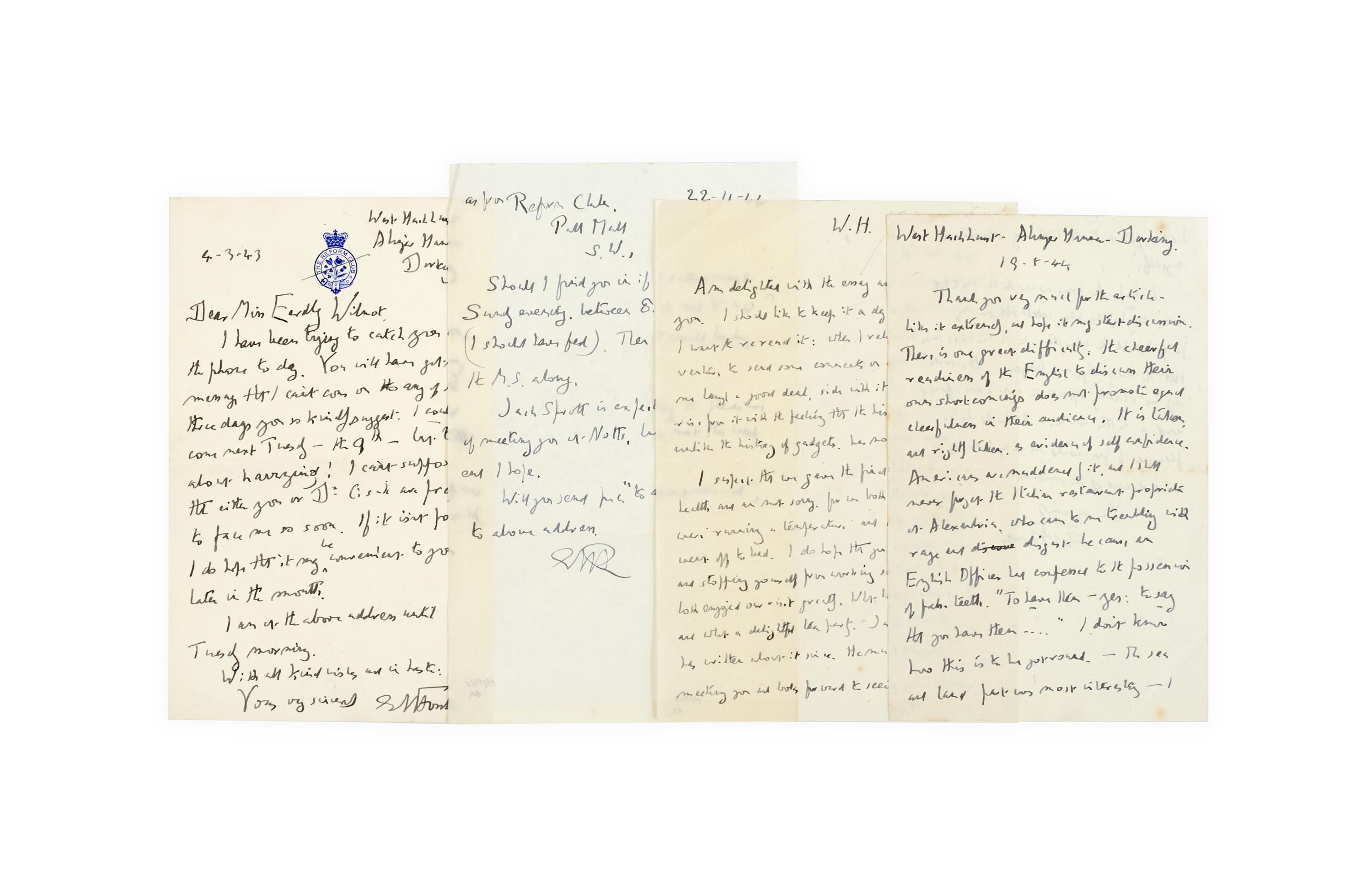
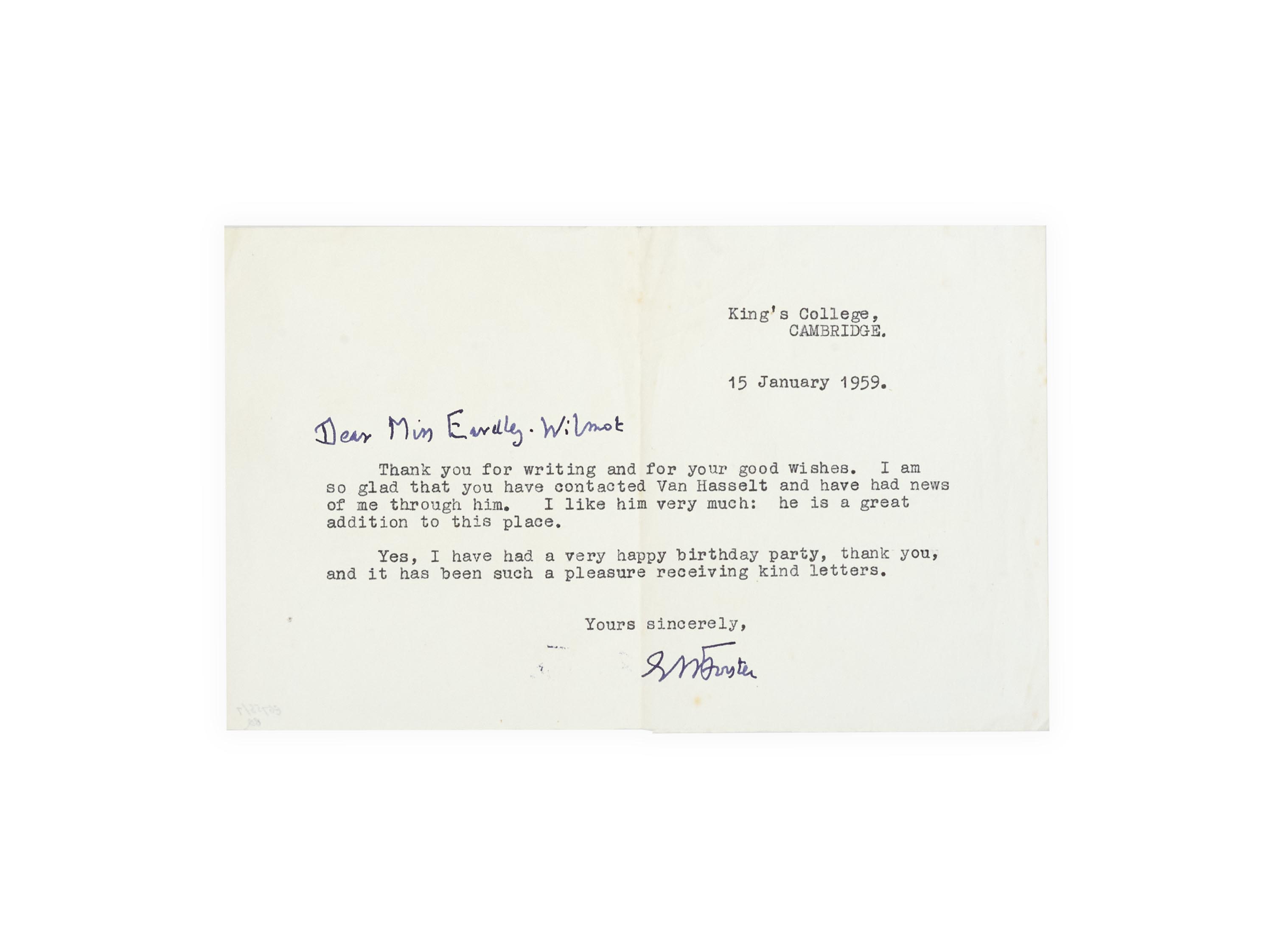
An important collection of unpublished autograph letters and other documents sent by E. M. Forster over some thirty years to his friend, the writer, archaeologist, and schoolteacher Hazel Eardley-Wilmot.
Forster’s correspondent lived an eclectic life: initially a governess in South America, Eardley-Wilmot (1910–1998) then became an English mistress at the Bath High School, aided Czech refugees during the Second World War, and after the War was sent to work for the newly established British Council in Prague, where she was deeply involved in Czech politics and witnessed the country’s fall to communism. She later settled on Exmoor, becoming an autodidact authority on the moorland’s history and archaeology, on which she published two books, and where she discovered the Bronze Age stone row monument known as the White Ladder.
The papers in our collection attest to a close and intellectual friendship over the last thirty years of Forster’s life, and contain several passages on themes for which his novels are celebrated – above all the English character and its complexities.
The letters begin in the latter part of the Second World War, with Forster reporting the crash of a V-1 bomber near his home in Abinger Hammer and giving a sober critique of the landings at Normandy on D-Day: ‘I did not want the Second Front to start in France. In Germany rather. Liberation, under modern conditions, is too like a knock-out blow to be agreeable to the liberated …’
Forster and Eardley-Wilmot were evidently exchanging drafts of their writings at this time, with Forster responding with praise for essays sent him by his friend. ‘Thank you very much for the article – like it extremely, and hope it may start discussion’, he remarks in one letter. And in another: ‘Am delighted with the essay and do congratulate you … It made me laugh a good deal, side with it on the whole, and rise from it with the feeling that the history of ideas, unlike the history of gadgets, has no existence … I hope that you are intending to publish Perspective or Proportion. Many ought to read it, English and non-so’. (This seems not to have been published, notwithstanding Forster’s enthusiasm.) For his part Forster sent Eardley-Wilmot a draft of a short (and unpublished) lecture of his on Czechoslovakia soon after the War, preserved in typescript here with what are likely his correspondent’s manuscript corrections.
Englishness and its peculiarities are a theme in these papers, as they are so famously in Forster’s novels. In response to one of Eardley-Wilmot’s essays, he remarks that ‘the cheerful readiness of the English to discuss their own shortcomings does not promote equal cheerfulness in their audience. It is taken, and rightly taken, as evidence of self confidence’. From his war years in Alexandria, he recalls how an Italian restaurateur ‘came to me trembling with rage and disgust because an English Officer had confessed to the possession of false teeth. “To have them – yes: to say that you have them …”’. And in his lecture on Czechoslovakia he writes: ‘We [English] have certain faults, and I think one of these is too much self-complacency … I am really afraid that in this task of helping to reconstruct Europe after the war, the Anglo-Saxon race may sometimes, with no intention of doing so – may tackle it in the wrong spirit and so may not have the good effect they hoped’.
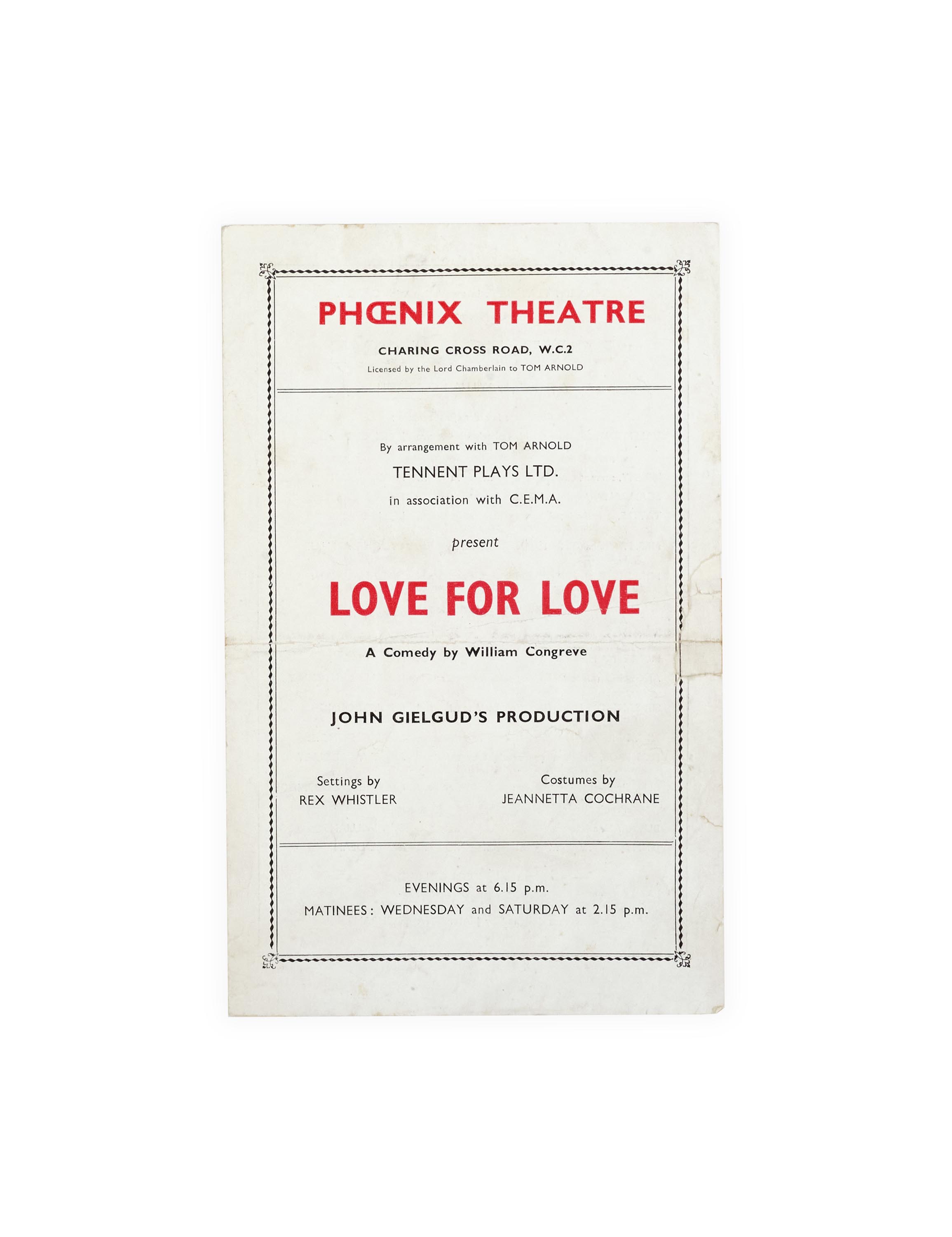
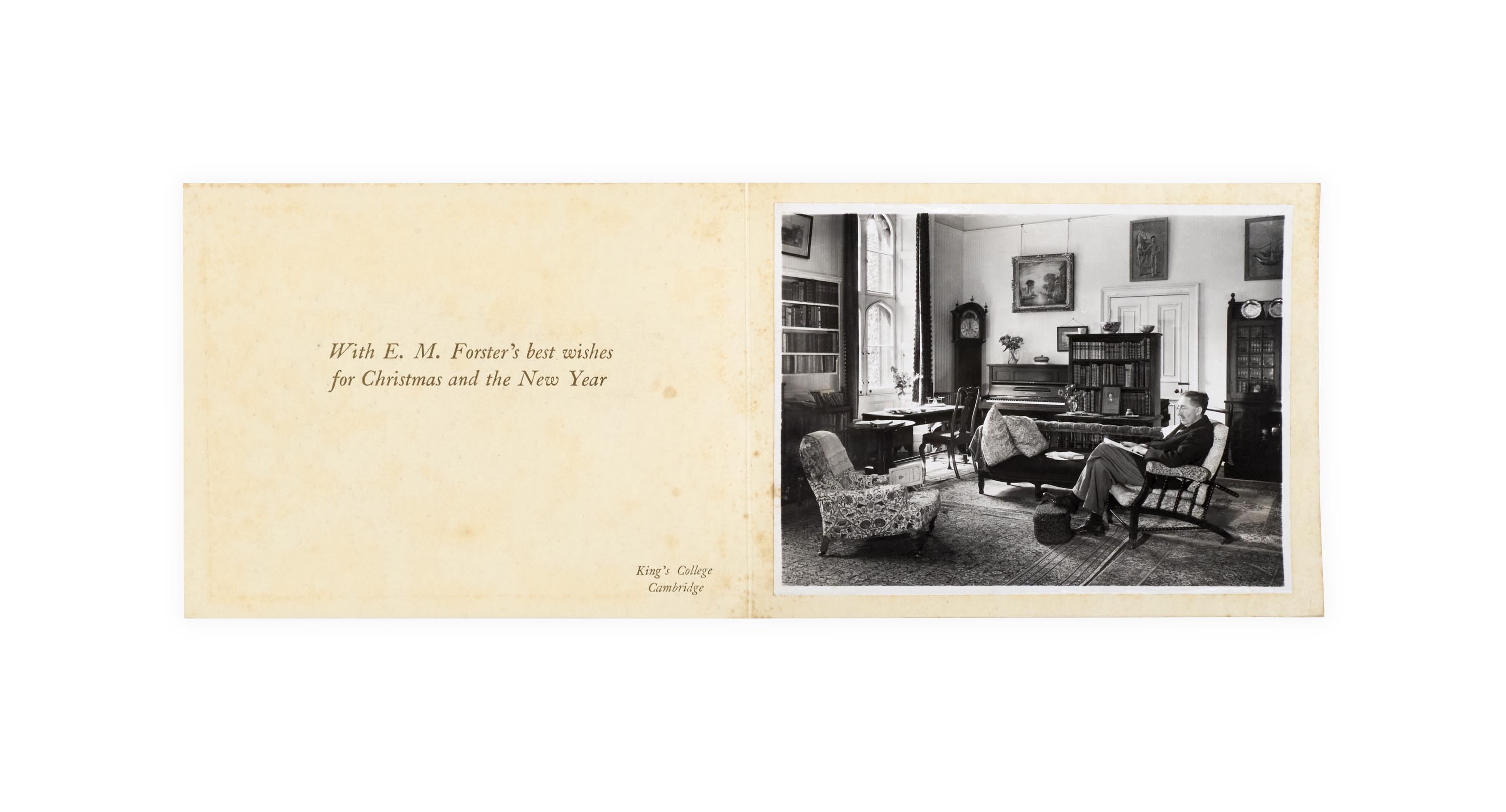
Alongside these literary and political discussions are a host of charming glimpses into Forster’s everyday life: attending Eardley-Wilmot’s tea parties, admiring the sculptures in her home, going to see Double Indemnity (‘the most dreadful rubbish’), and sojourning with his longstanding friend and lover Bob Buckingham and the latter’s wife. The collection ends with a poignant card from Forster, now too frail to write other than to sign his name, from the final weeks of his life, and the programme for his memorial service at King’s, which Eardley-Wilmot no doubt attended.
All of these items are unpublished, and none of the letters noticed in Lago’s Calendar (1985) of Forster’s correspondence held in private and institutional collections.