Musical Manuscript for the Nuns of Namur
[SAINT-LAMBERT, Monsieur de.]
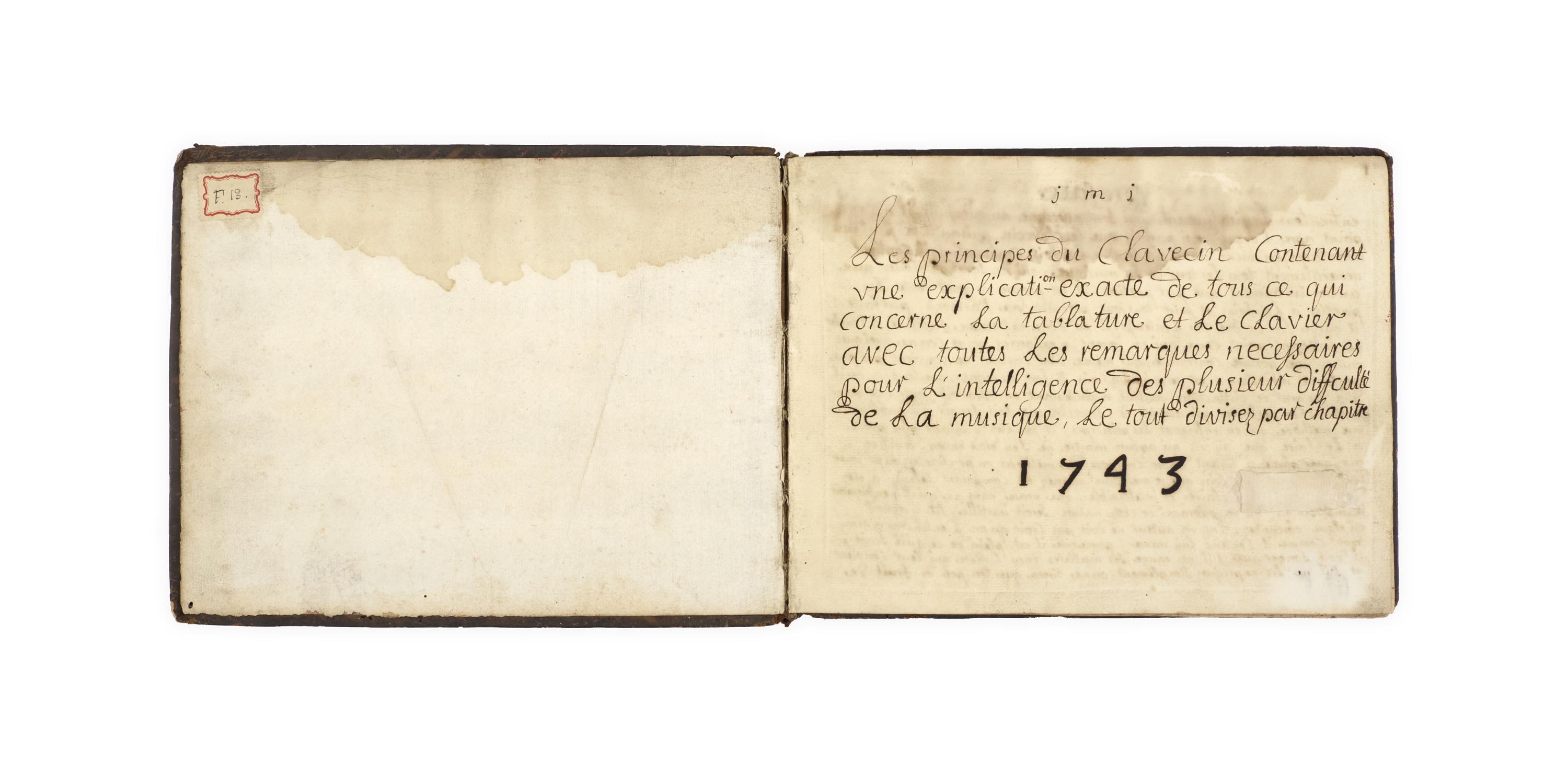
‘Les principes du clavecin contenant une explication exacte de tous ce qui concerne la tablature et le clavier avec toutes les remarques necessaires pour l’intelligence des plusieur diffculté [sic] de la musique, le tout divises par chapitre. 1743.’ Namur, 1743–4.
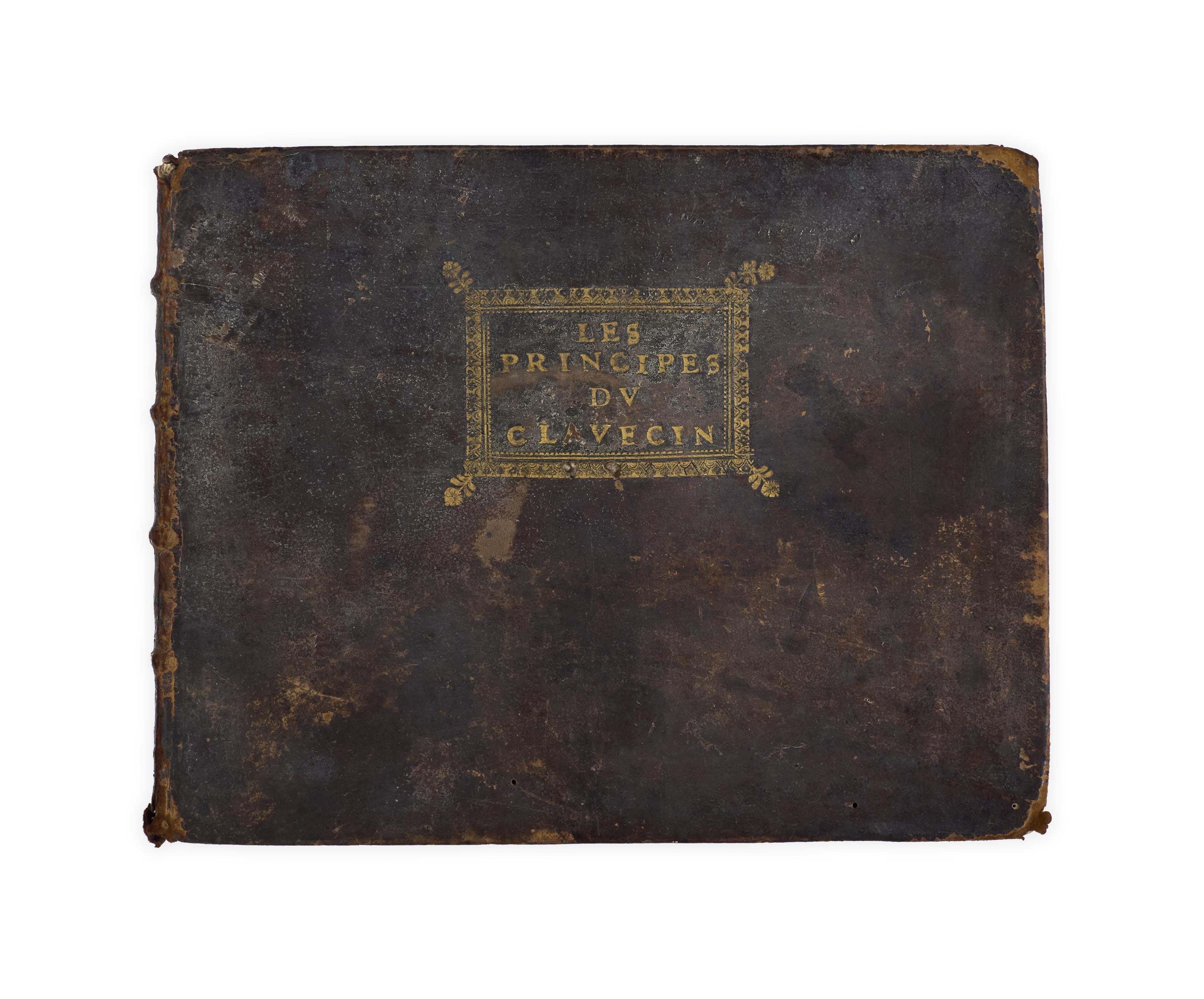
Manuscript in French on paper, oblong 4to (190 x 243 mm), ff. [89] (of 94), paginated in a contemporary hand to 185, final 11 leaves blank except for pagination; a total of five leaves (almost certainly blank except for pagination) removed before and after present final blank leaf, dampstain at head of first few leaves, small rectangular area of title (probably on ownership inscription) excised and replaced with blank paper (with loss of a few words on verso); contemporary calf, spine gilt, upper cover lettered direct ‘Les principes du clavecin’ in gilt within gilt border, marbled paper pastedowns, edges sprinkled red; rubbed and worn, extreme head and foot of spine chipped, a few wormholes.
Added to your basket:
‘Les principes du clavecin contenant une explication exacte de tous ce qui concerne la tablature et le clavier avec toutes les remarques necessaires pour l’intelligence des plusieur diffculté [sic] de la musique, le tout divises par chapitre. 1743.’
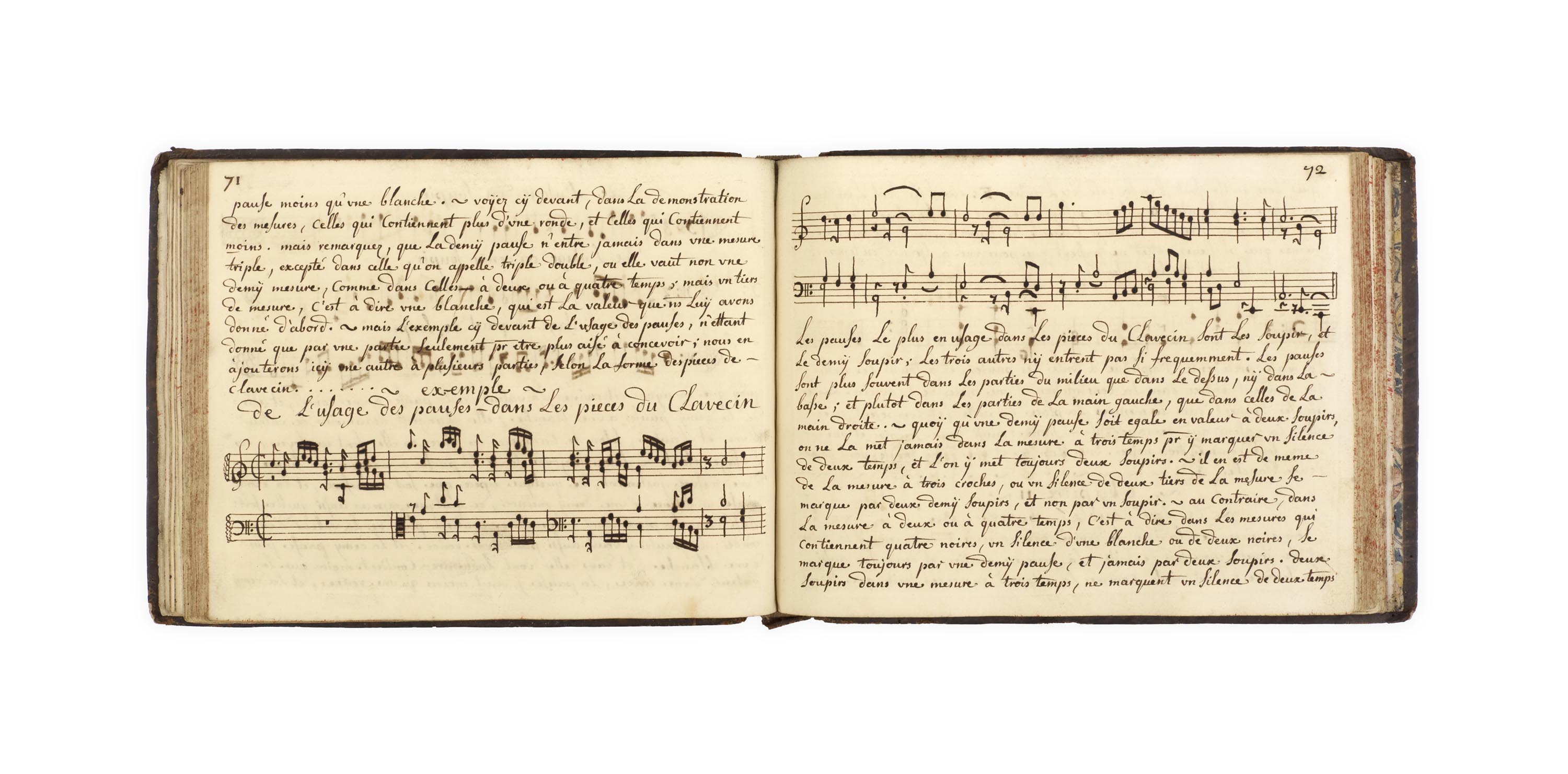
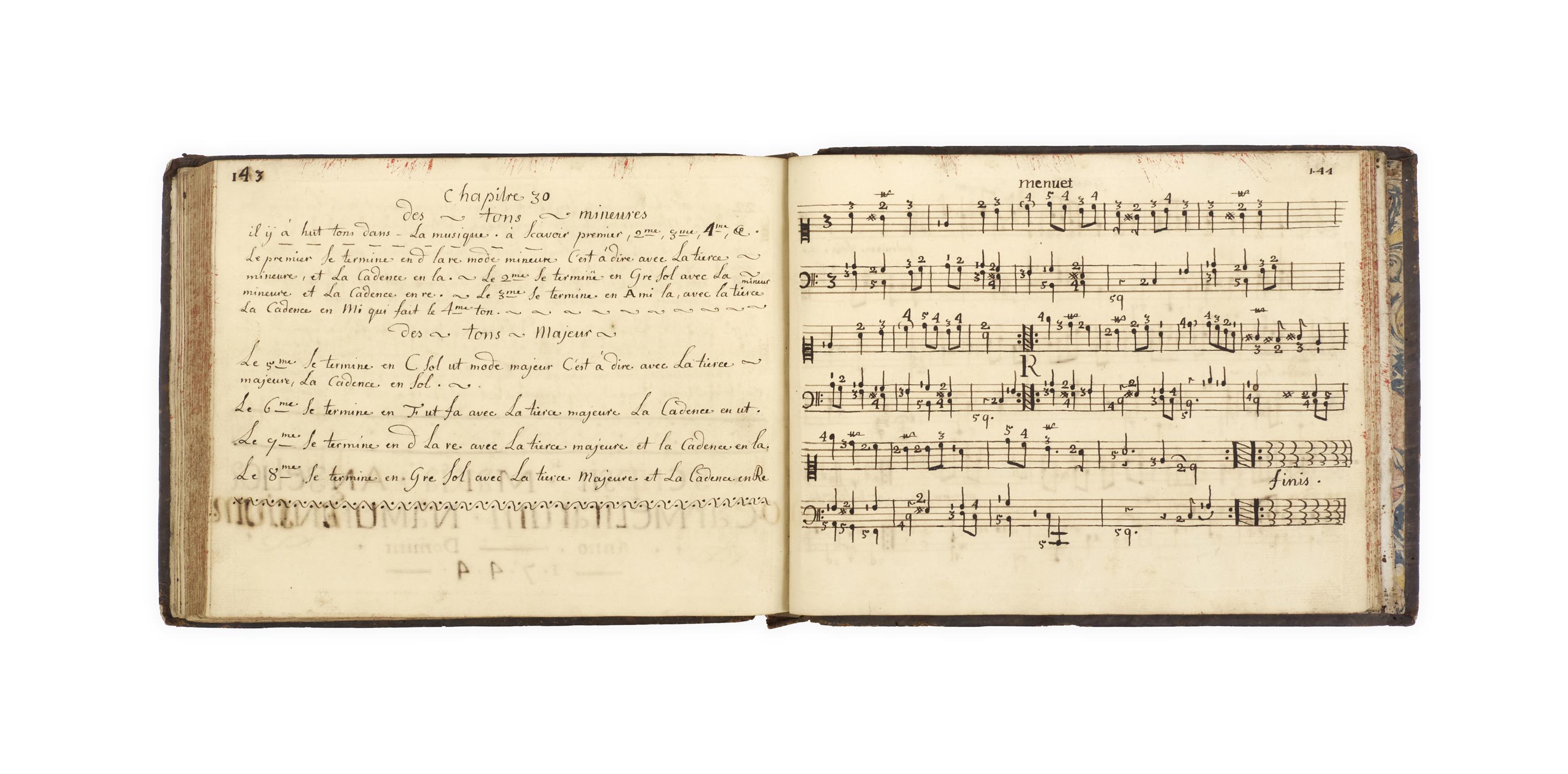
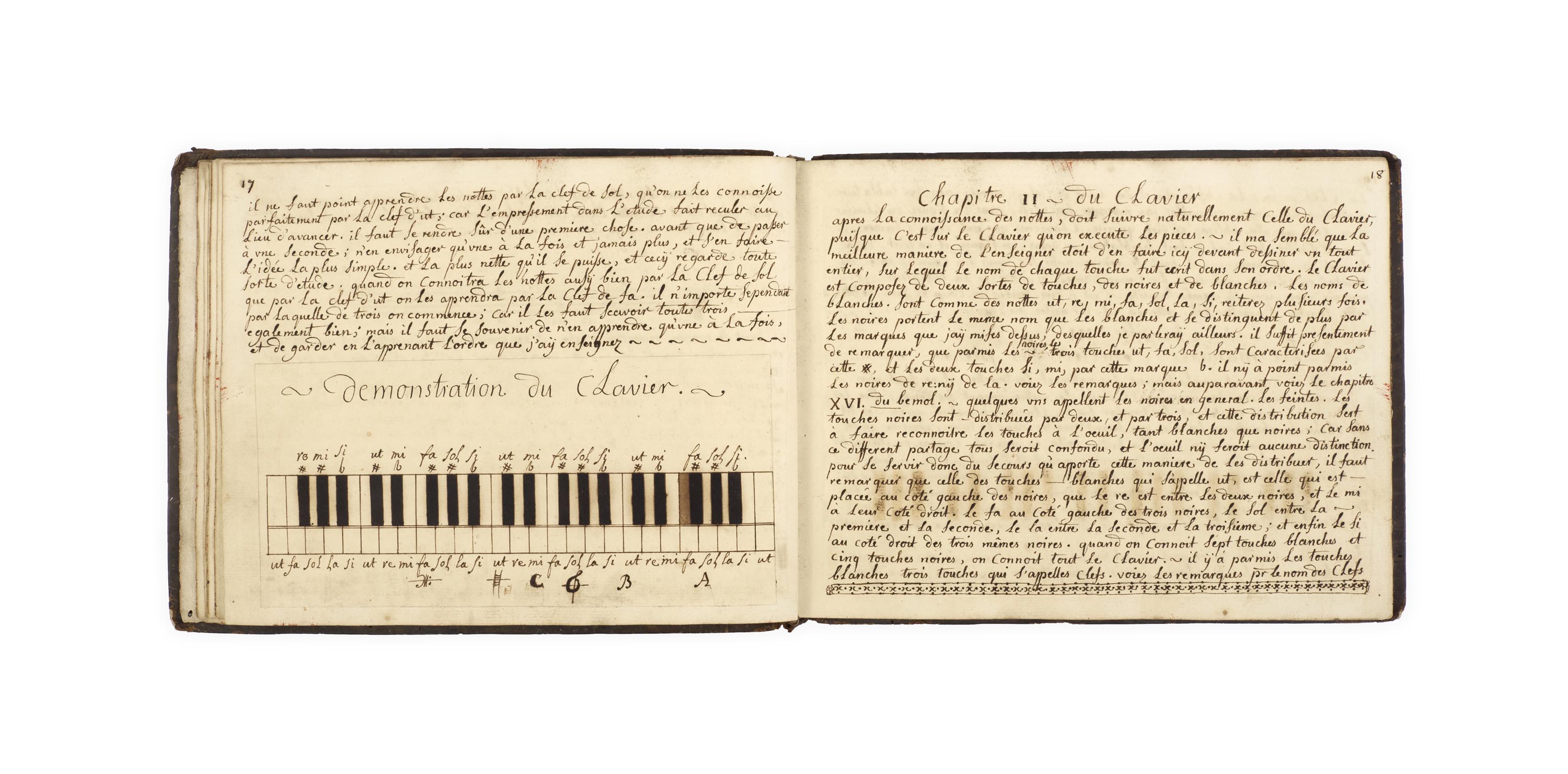
Manuscript copy of Saint-Lambert’s celebrated and rare treatise on the harpsichord (first published 1702), compiled in 1743–4 by a sister of the Carmelite convent in Namur.
Little is known about Saint-Lambert (fl. c. 1700), not even a Christian name, but he was doubtless a harpsichord teacher active primarily in Paris. ‘Les principes du clavecin was, as its author claimed, the first method book for the harpsichord, antedating François Couperin's L’art de toucher le clavecin by fourteen years. Its first eighteen chapters, devoted primarily to fundamentals of music, contain significant information regarding the range of the harpsichord, the performance practice of the slur (of particular value for the performance of préludes non mesurés) and a chapter on metre and tempo. Of the remaining chapters, one is devoted to fingering (including a fully fingered minuet and gavotte) and the other nine to ornamentation. By reproducing and commenting on the ornament symbols of four seventeenth-century keyboard composers – Chambonnières, Nivers, Lebègue and especially D’Anglebert – Saint Lambert provided a useful comparative perspective on the performance practices of his day. The Nouveau traité de l’accompagnement [1707] is equally systematic .... In his writings Saint Lambert comes across as a sympathetic and open-minded teacher. Although the books were written with amateurs in mind, one or both were cited, or even plagiarized, by theorists such as Brossard, Rameau, Heinichen, Mattheson and Adlung. He seems to have had modest abilities as a composer: the minuet and gavotte that appear at the end of the Principes are presumably of his own composition and two volumes from the series of Recueils d’airs sérieux et à boire (Paris, 1701 and 1702) contain songs of his’ (Grove Music Online).
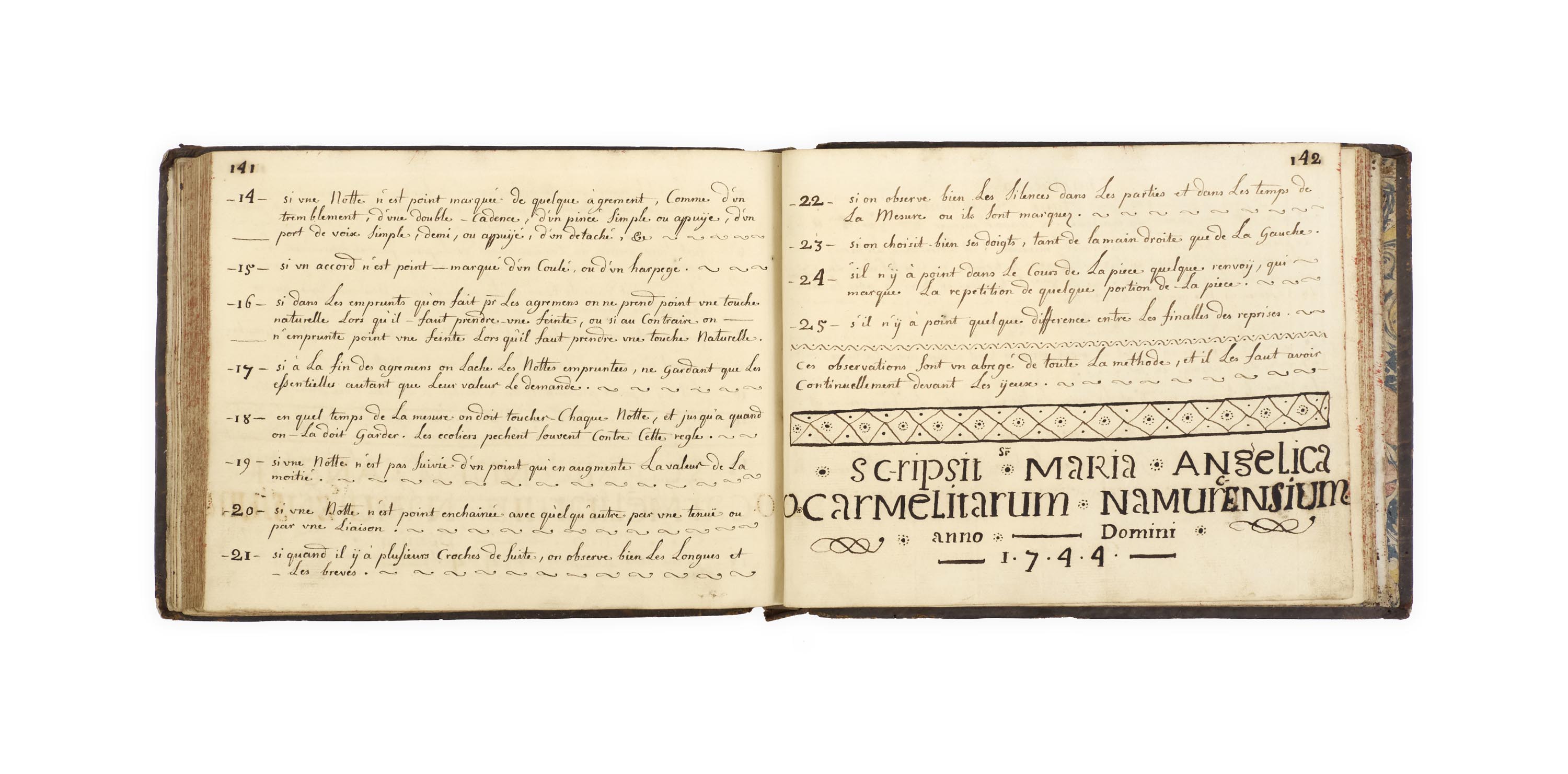
The present manuscript, carefully and attractively copied out, is signed and dated by its female scribe: ‘scripsit S[oro]r Maria Angelica O[rdinis] Carmelitarum Namurcensium anno Domini 1744’ (p. 142). It testifies to the continued importance (and presumably also the rarity) of Saint-Lambert’s treatise as well as to the musical life of the Carmelite nuns of Namur who evidently owned at least one harpsichord as well as an organ. The convent had been established in 1457, five years after the prior general John Soreth obtained papal approval to enrol women in the order, and was dissolved at the end of the eighteenth century.
Following the end of the index to Saint-Lambert’s work (p. 148) are five additional short texts: two guides to tuning a harpsichord (‘Regles pour accorder les clavesains’ and ‘Regle p[ou]r accorder les clavesains, p[a] r le plus cour [sic]’, pp. 149–50); ‘Principe du clavecin de l’organis [sic] des grands jesuites a Paris’ (p. 151, beginning ‘il faut s’assoir sur un siege commode […]’); ‘Avis et enseignement du Sieur Blavier maitre et fameux organis [sic] de la ville de Liege [i.e. André-Joseph Blavier (1713–1782), director of the choir at Antwerp Cathedral from 1737]’ (pp. 153–4), comprising five short instructions on tuning the ‘jeux d’ange’ (sic, for ‘jeux d’anches’ or reed stops) of an organ, the first of which is ‘il faut beaucoup de patience’; and a ‘Regle p[ou]r la musique vocale’ (p. 155).
No manuscript copies of Saint-Lambert’s treatise found in RISM. Of the 1702 first edition OCLC records only three copies.