With Reused Fifteenth-Century Woodcuts
SCALVO, Bartolomeo.
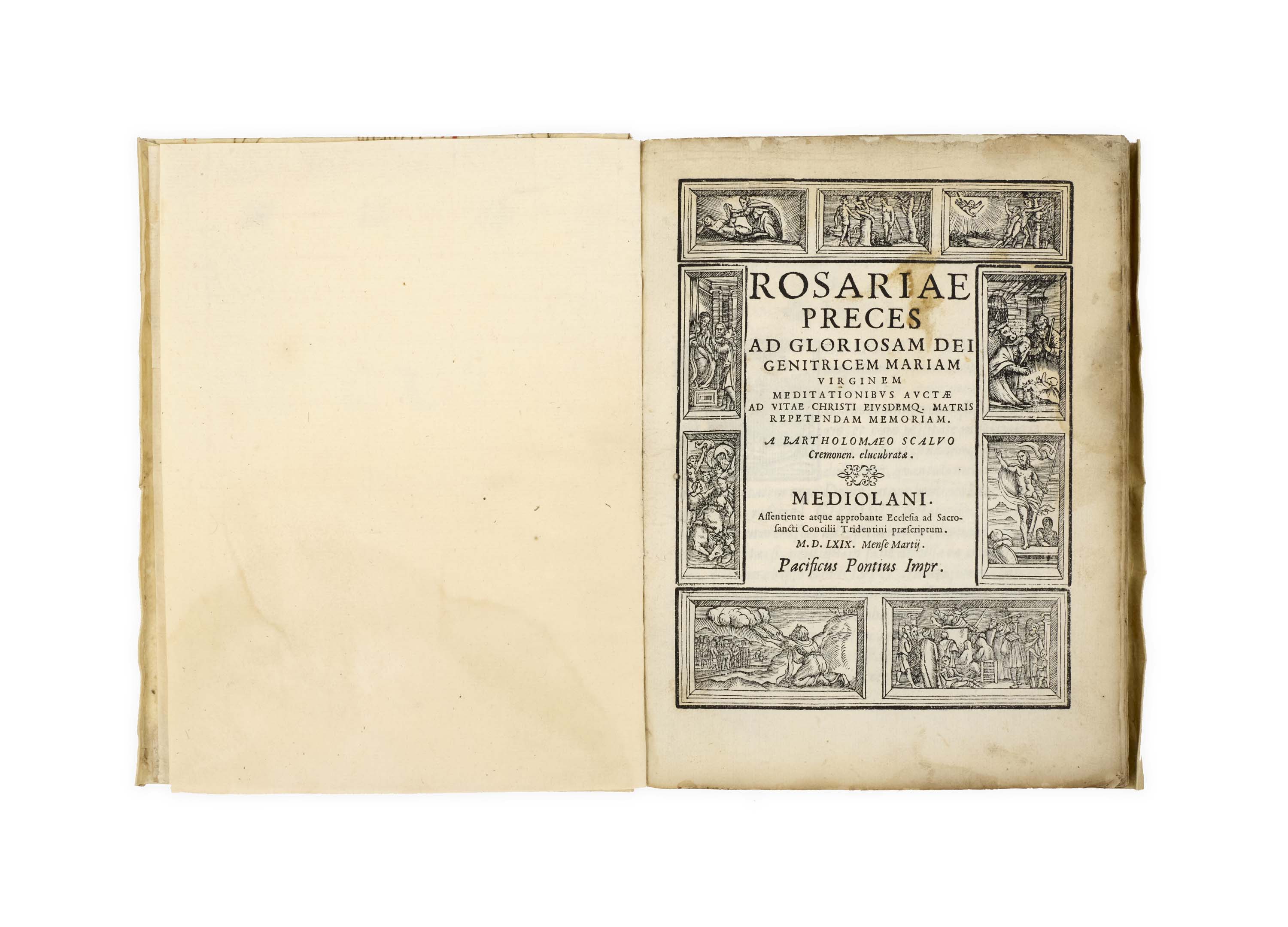
Rosariae preces ad gloriosam Dei genitricem Mariam Virginem meditationibus auctae ad vitae Christi eiusdemq[ue] matris repetendam memoriam. Milan, Pacificus Pontius, 1569.
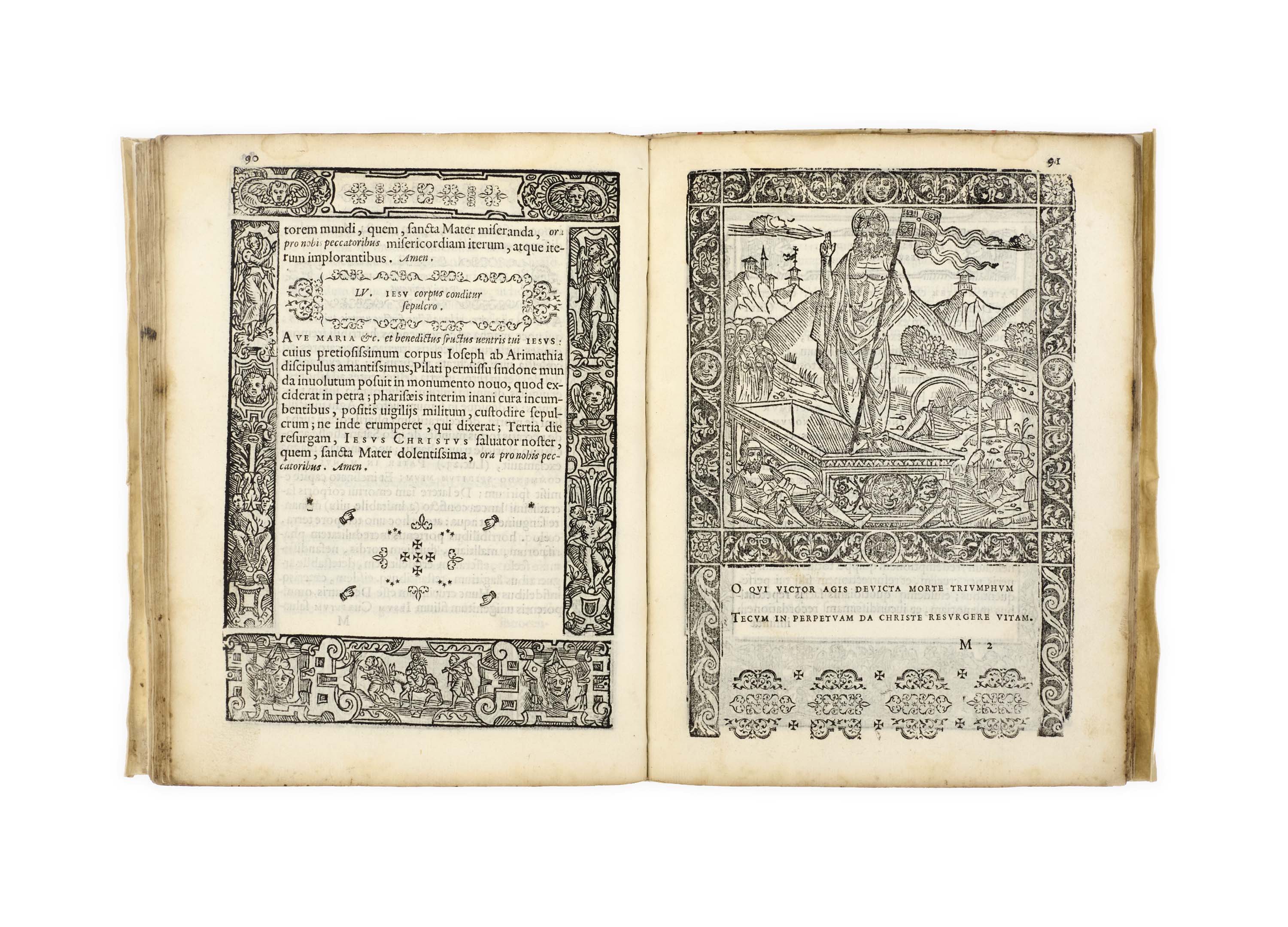
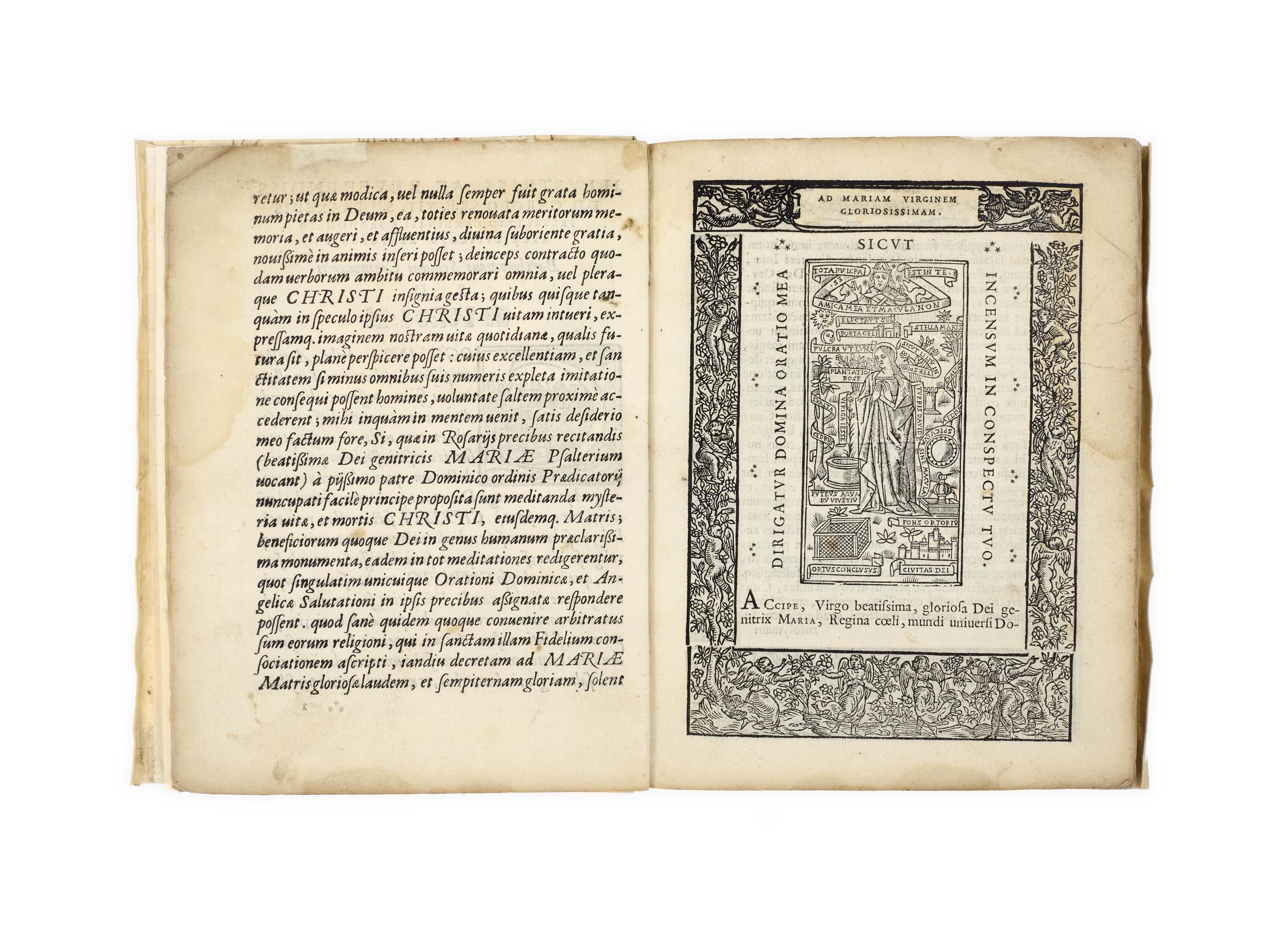
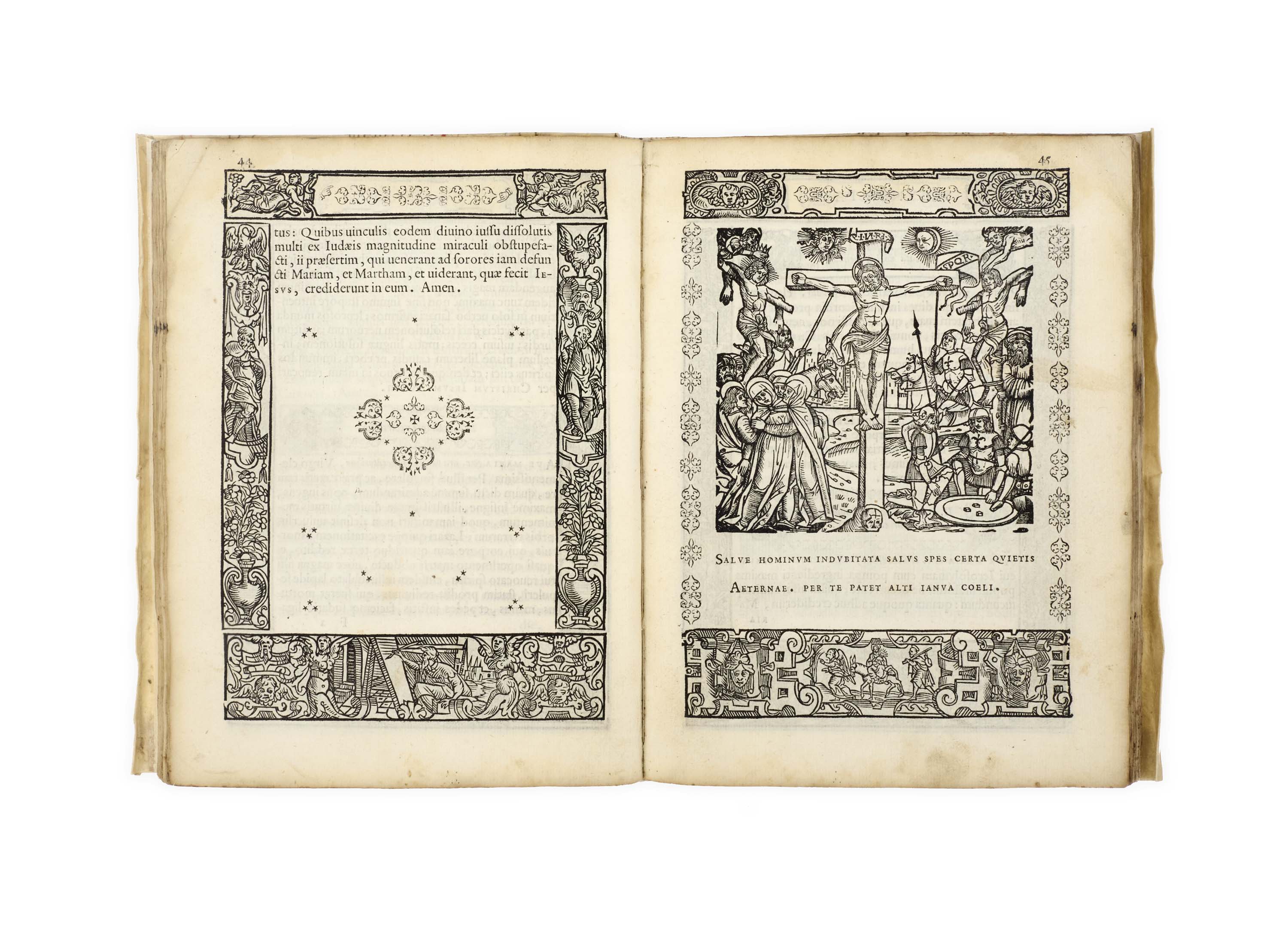
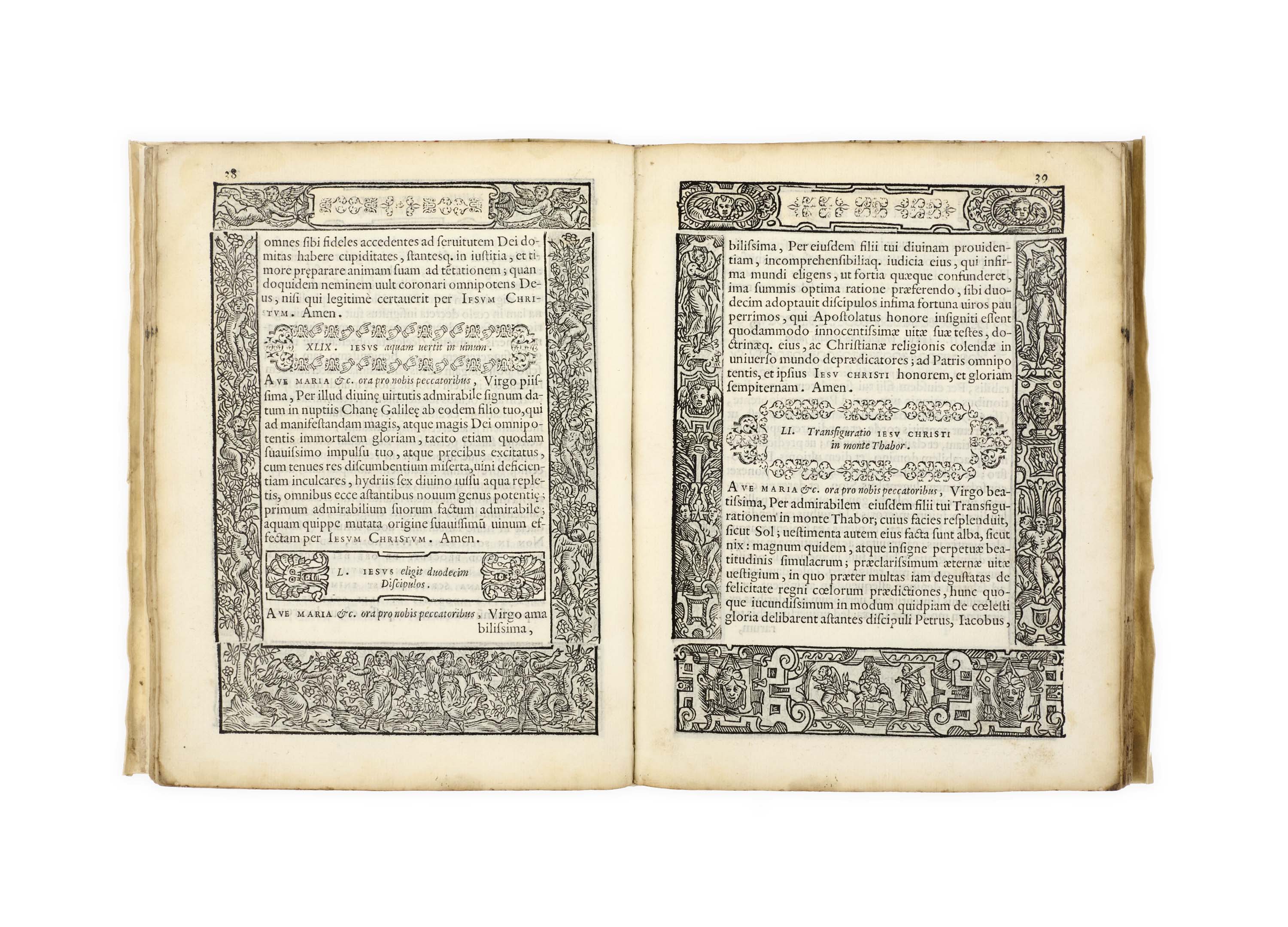
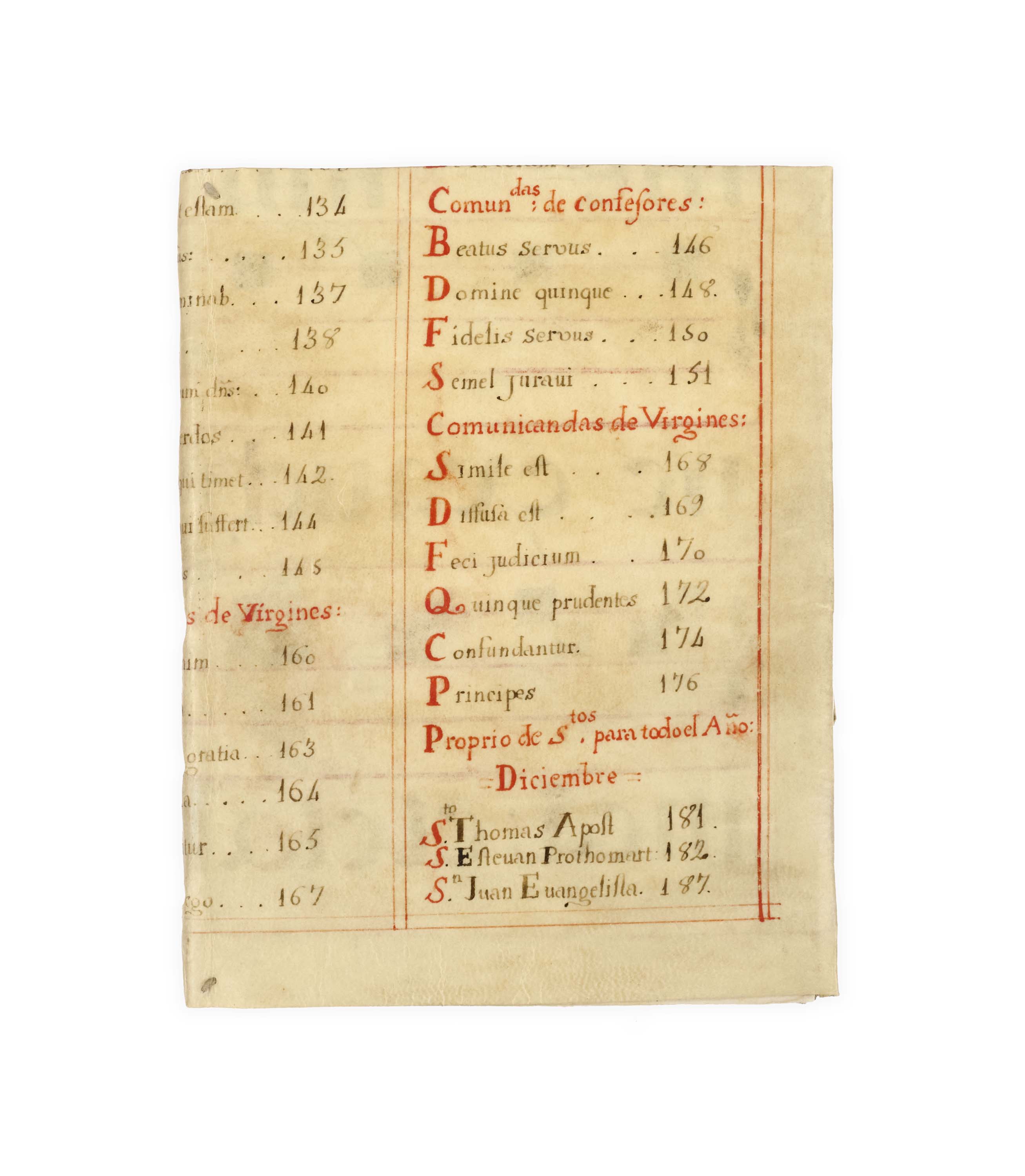
4to, pp. [12], 131, [5]; title within four-part woodcut frame composed of nine panels depicting scenes from the Old and New Testaments (including the temptation of Adam and Eve, Moses receiving the Ten Commandments, the Nativity, and the Resurrection), large woodcut initial ‘C’ containing bird’s-eye view of a city on second leaf, with large woodcuts of the Virgin Mary in the garden of delight (f. 3*5r), the Virgin and Child enthroned before two groups of religious and lay men and women kneeling in prayer (f. 3*6v), the Crucifixion (p. 45) and the Resurrection (p. 91); each text page (except for the dedication and index) set within one of four different decorated and historiated woodcut frames composed of four blocks incorporating scenes from the life of Christ and the Virgin, cherubs, leafy branches, caryatids, masks, and flower vases; typographic ornamental cartouche, endpieces, and decorations (including manicules) throughout; title and last leaf slightly soiled, minor restoration at top edge of first five leaves, upper outer corner of last leaf torn and restored, with a few words of text supplied in nineteenth-century manuscript, sporadic faint marginal water-stain, nevertheless a very good copy in a modern binding reusing a leaf from a sixteenth-century Spanish religious manuscript.
Added to your basket:
Rosariae preces ad gloriosam Dei genitricem Mariam Virginem meditationibus auctae ad vitae Christi eiusdemq[ue] matris repetendam memoriam.
First edition of this Marian book of prayers for the use of Rosary societies, lavishly illustrated reusing late fifteenth- and early sixteenth-century woodcuts.
Published in the same year of Pius V’s bull Consueverunt Romani Pontifices, in which the pope finally established the devotion to the rosary in the Catholic Church, and dedicated to Charles Borromeo, Archbishop of Milan, this edition was soon followed by an Italian translation, published also in Milan and by the same printer, employing an almost identical layout and reusing all the woodcuts except one (the Virgin Mary in the garden of delight) which appears only in this edition.
Rava, in his Supplement à Max Sander ‘Le livre à figures italien de la Renaissance’, dedicates a long entry to the three woodcuts included in both the Latin and Italian editions: the Crucifixion is described as ‘coming from an impression of an earlier date (probably from a missal)’ and ‘in the most typical Lombard style’, while the Resurrection and its white-on-black frame ‘obviously come from a much older impression, undoubtedly dating back to the first years of the 16th century’ and ‘belong to the best period of Lombard woodcutting’. For the latter, Rava finds strong similarities with the large woodcut in Melchior da Parma’s Dialogi de anima (1499), that in Nanus Mirabellus’s Polyanthea (1503), one in the Vita della Vergine Maria (1499), and those in Ferraro’s Tesauro Spirituale (1499), agreeing with Paul Kristeller in attributing the woodcut to an artist dubbed the ‘Master of Melchior da Parma’ or his school (see Kristeller, Die lombardische Graphik der Renaissance, pp. 48–57). The first woodcut, depicting the Virgin Mary in the garden of delight surrounded by scrolls bearing some of her epithets (for an unknown reason present only in this edition and not included in the Italian translation), is also earlier in date: it had appeared in the Officium Romanum printed by Gregorius de Gregoriis in Venice in July 1516 (see Essling 483) and quite possibly before that.
Library Hub, OCLC, and USTC find no copies in the UK. OCLC finds five copies in the US, at UCLA, Notre Dame, Dayton, Bridwell Library, and Yale, to which USTC adds one more at NYPL.
EDIT16 CNCE 50068; USTC 855398. See Rava, Supplement à Max Sander 4342 bis (for the Italian translation), 6891 bis (for the Latin edition, with no mention of the first woodcut), and plates 50 and 51.