
Sibyls in a Scottish Library
[SIBYLLINE ORACLES.]
Σιβυλλιακοι χρησμοι hoc est Sibyllina oracula ex vett. codd. aucta, renovata, et notis illustrata a D. Johanne Opsopoeo Brettano cum interpretatione Latina Sebastiani Castalionis et indice. Paris, [Compagnie du grande navire], 1607.
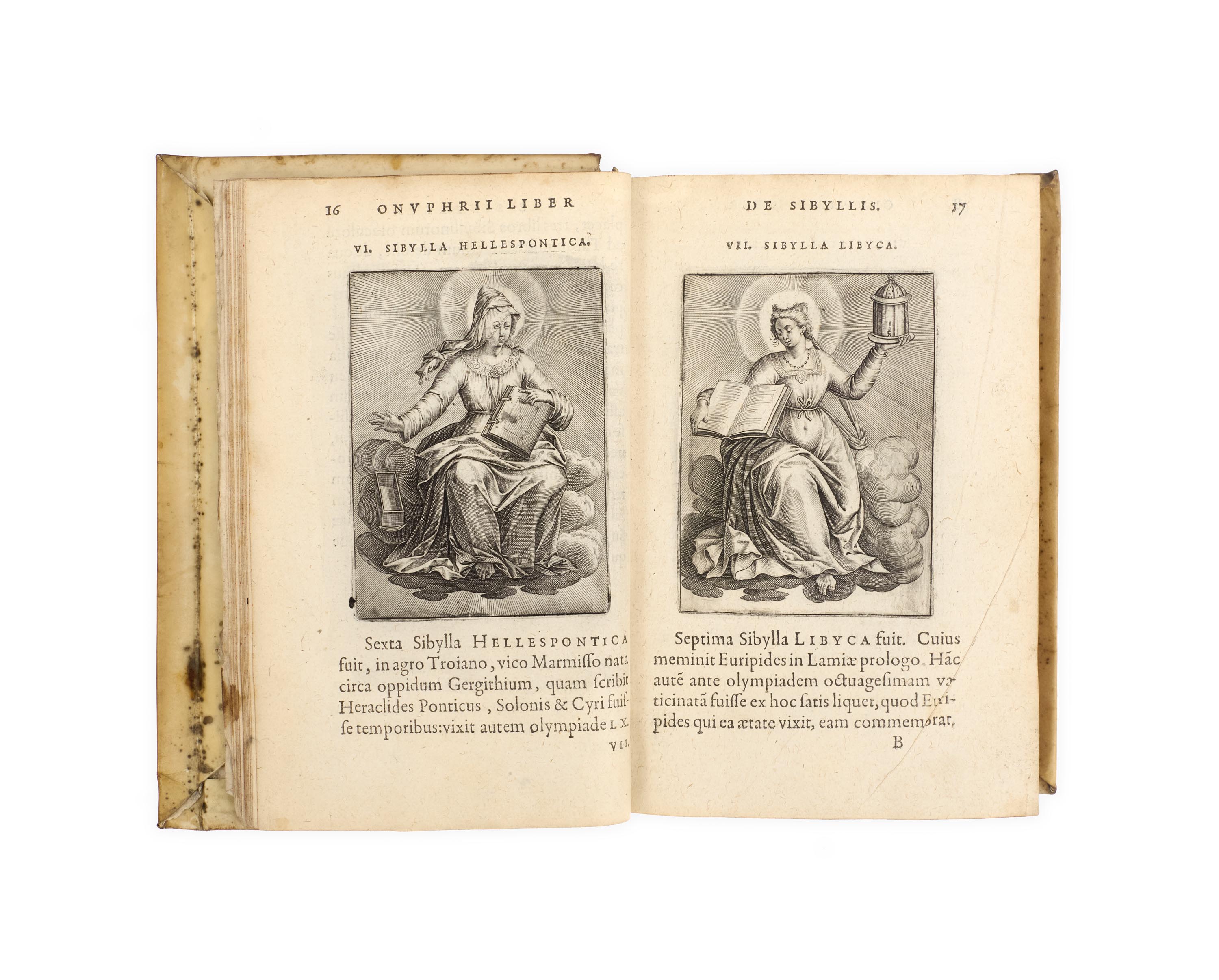
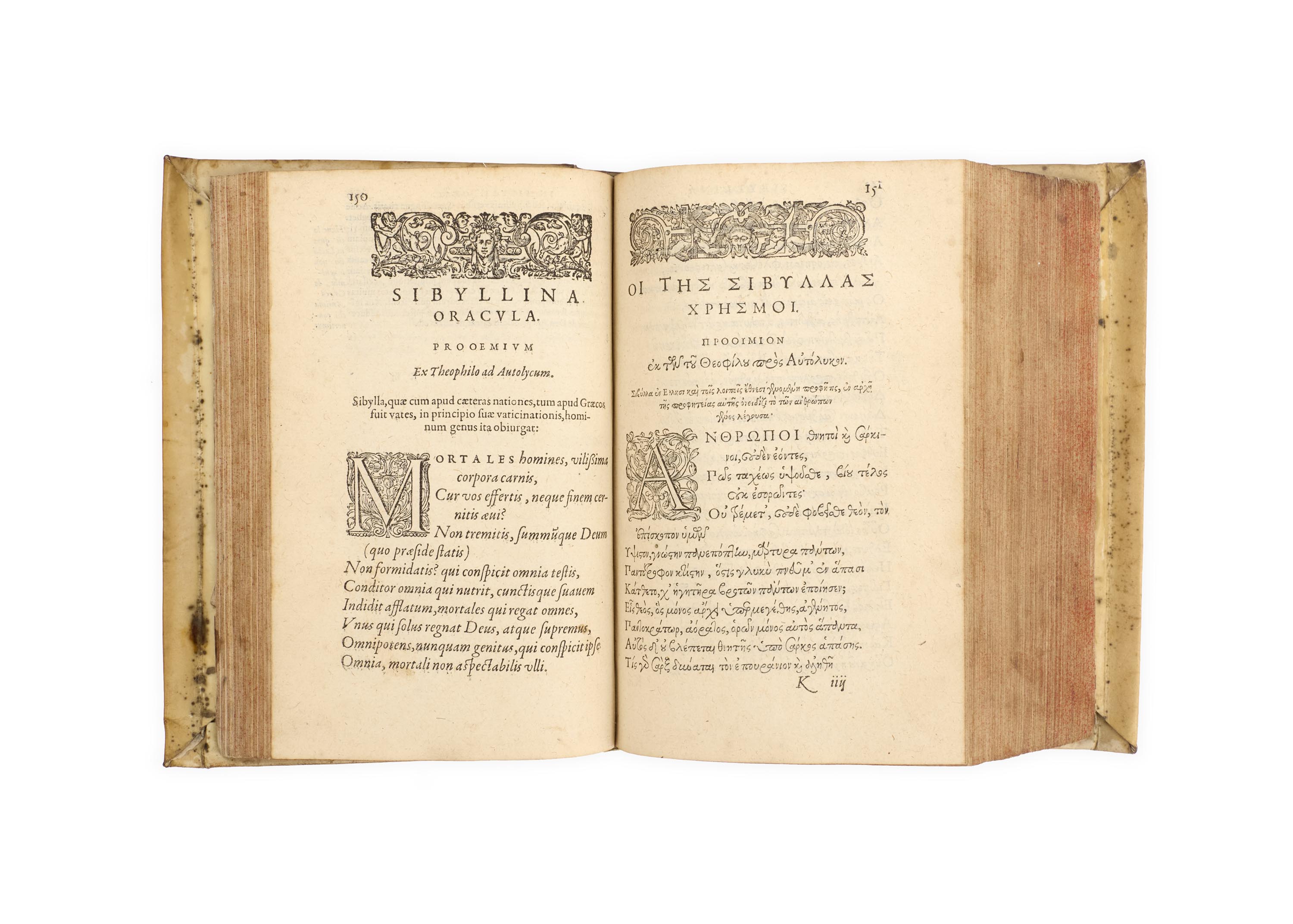
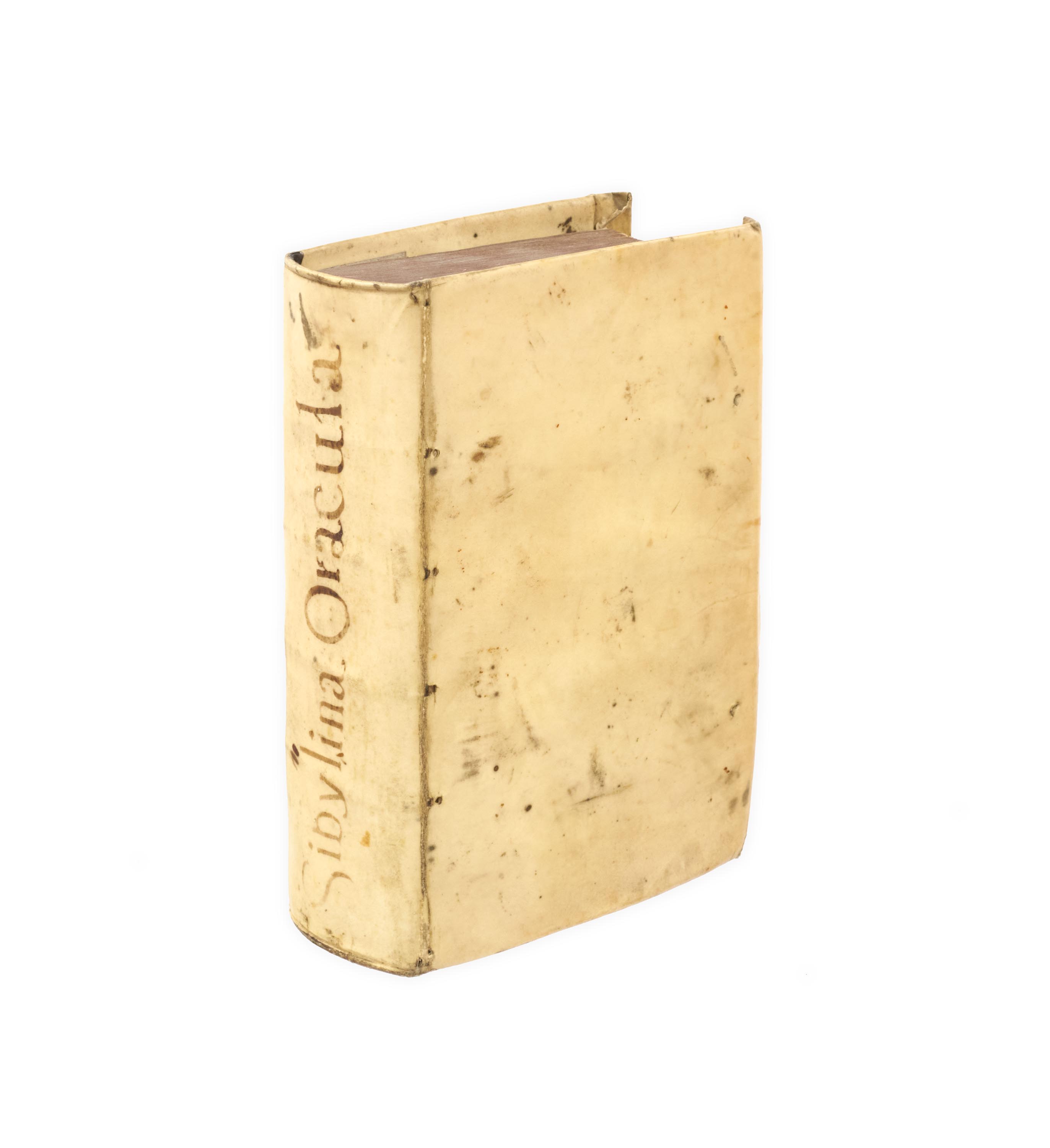
Four parts, 4to, pp. [xvi], 524; 71 [i.e. 73], [3]; [ii], vii–xxiiii, 114, [6]; [ii], 7–144, with an engraved title-page by Karel van Mallery (incorporating the royal ship device of the Compagnie du grande navire), and twelve engraved illustrations of the Sibyls; parallel text in Latin and Greek, separate title-pages to the Notes, the ‘Oracula metrica Iovis, Apollinis, Hecates, Serapidis, et aliorum deorum et vatum’ and the ‘Oracula magica Zoroastris’, the latter two with woodcut royal ship device; a very good copy in contemporary stiff vellum, yapp edges, holes from two pairs of ties, manuscript lettering to spine; binding slightly soiled, upper hinge broken; armorial bookplate of Sir William Baird of Newbaith (i.e. Newbyth), Baronet (1654–1737).
Added to your basket:
Σιβυλλιακοι χρησμοι hoc est Sibyllina oracula ex vett. codd. aucta, renovata, et notis illustrata a D. Johanne Opsopoeo Brettano cum interpretatione Latina Sebastiani Castalionis et indice.
Second edition of a comprehensive scholarly collection of the so-called Sibylline Oracles, handsomely printed in three sizes of the Grecs du roi, and illustrated with fine plates of the Sibyls by Karel van Mallery.
The Sibylline Oracles were a collection of Judaeo-Christian rather than ancient Greek poems, first collected in the sixth century during the reign of Justinian. ‘The extant texts of the Sibylline Oracles bear no resemblance to what Sibyls may have uttered at Erythrae or Cumae, let alone to what was fashioned by state officials for Roman consumption. The surviving collection is a literary product, written largely in Homeric hexameters (as the originals were reputed to be) and composed by multiple Jewish, Christian, and perhaps a few pagan authors ranging from the 2nd century BCE to the 7th century CE, with diverse aims and agendas’ (OCD).
A portion of the Greek text of the Sibylline Oracles was first published in Basel in 1555, containing eight (of fourteen) books followed by the metrical Latin version by Sébastien Châteillon. This version of the text, more complete and accurate, produced with reference to other manuscripts by Johannes Opsopoeus (1556–1596), still with Châteillon’s translation, was first published in Paris in 1599. The fine engravings by Mallery appear in the preliminary section, which contains various extracts from texts ancient and modern about the Sibyls.
‘What began as a series of apocalyptic forecasts with only rare and tenuous connection to specified time and space concludes with three books committed to genuine or purported records of historical persons and events in chronological sequence. More interesting still, what began as a Jewish appropriation of the Greek Sibyl, thus exemplifying the hybrid that was Hellenistic Judaism, concludes with late antique authors (whether Jewish, Christian, or pagan) commandeering the Sibyl to lend authority to historical or pseudo-historical narrative’ (ibid.).
The Compagnie du grande-navire was a collective of Parisian publishers active from 1582 to the mid-seventeenth century, with a changing composition. Their joint preface (from the 1599 edition) is addressed to Jacques-Auguste de Thou.
USTC 6015959; Caillet 10179; Freeman, Bibliotheca Fictiva 59; Thorndike VI, 492.