Elephants and Carthaginians
STEPHANUS of Byzantium; HANNO; Abraham Van BERKEL, editor and translator.
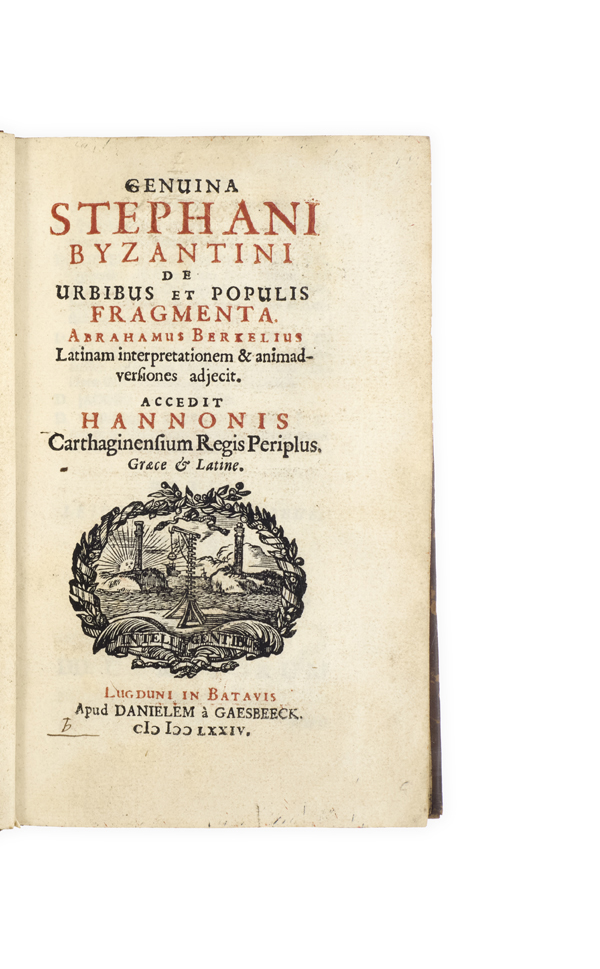
Genuina Stephani Byzantini de urbibus et populis fragmenta … Accedit Hannonis Carthaginiensium regis periplus. Graece & Latine. Leiden, Daniel van Gaasbeeck, 1674.
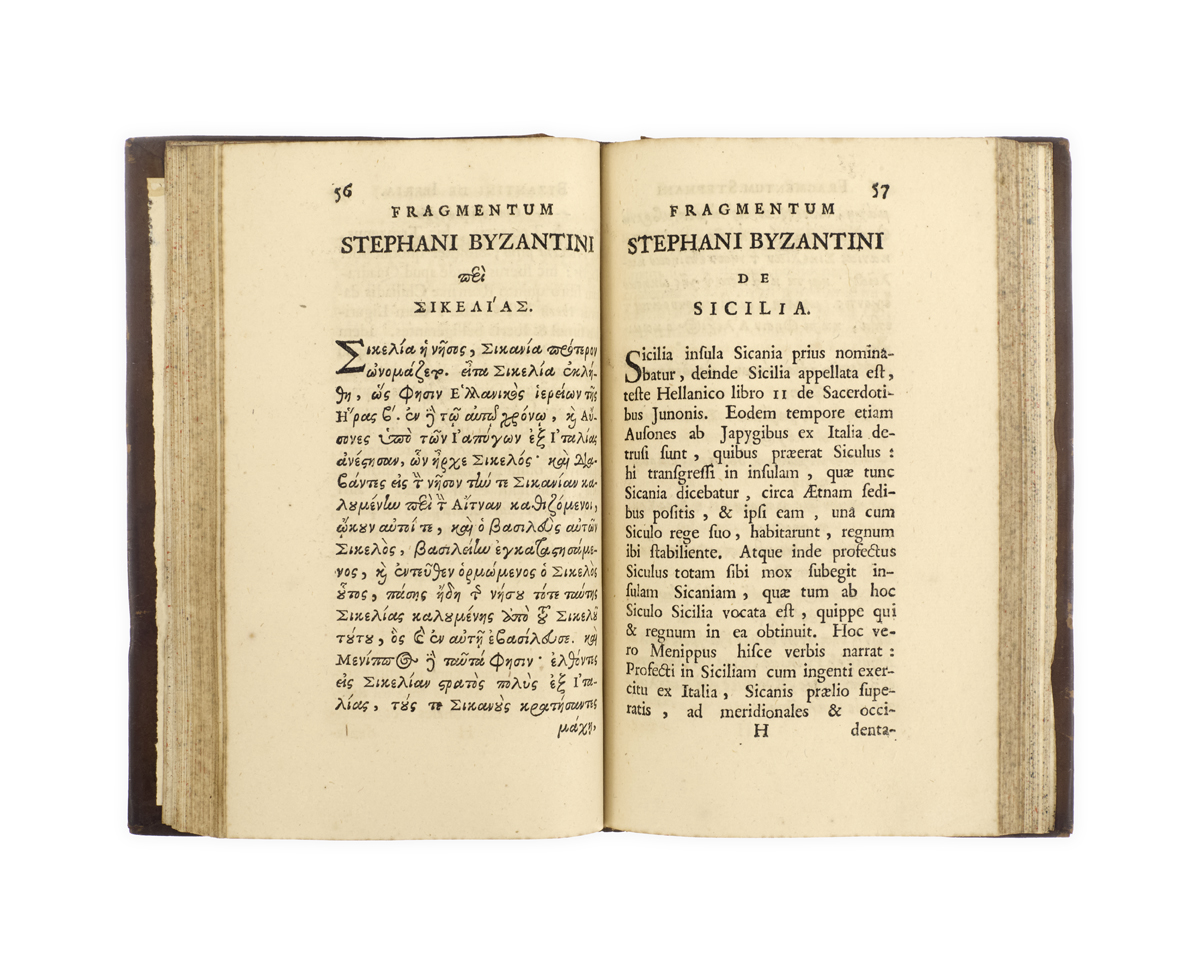
8vo, pp. [xxviii], 63, [1, blank], 110, [2, errata]; printed in Greek and Latin on facing pages, title printed in red and black, woodcut device to title and part-titles; quire g lightly spotted, otherwise a very good copy; bound in contemporary British mottled calf, edges speckled green and red; binding somewhat rubbed, cracks to joints; nineteenth-century armorial bookplate of the Earl of Macclesfield with blind stamp to first two leaves, shelfmarks to endpapers, and remains of shelf label to spine.
Added to your basket:
Genuina Stephani Byzantini de urbibus et populis fragmenta … Accedit Hannonis Carthaginiensium regis periplus. Graece & Latine.
First edition thus, a volume of short and fragmentary geographical works from Greece, Africa, and Egypt, spanning a thousand years of antiquity.
The sixth-century grammarian Stephanus of Byzantium compiled a monumental dictionary of place-names and associated information, Ethnica, which only survives in an epitome and in fragments; this little book contains part of the letter D (including Durazzo and Dodona) and the start of letter E, with the full list of entries for E, as well as chapters on Iberia and Sicily. Van Berkel’s is the first published Latin translation; any earlier translations remained in manuscript.
The second work, by Hanno the Carthaginian, ‘one of the Greek periploi, a wonder-journey purporting to be a translation of a Punic inscription, recounts the adventures of a large expedition southwards along the Atlantic coast of Morocco, under the leadership of this Carthaginian, in about 480 BCE’ (OCD). It was first published in 1533, and this is the second edition of the Latin translation and short commentary by Conrad Gesner, first published in 1559. This edition also includes the commentary by Samuel Bochart.
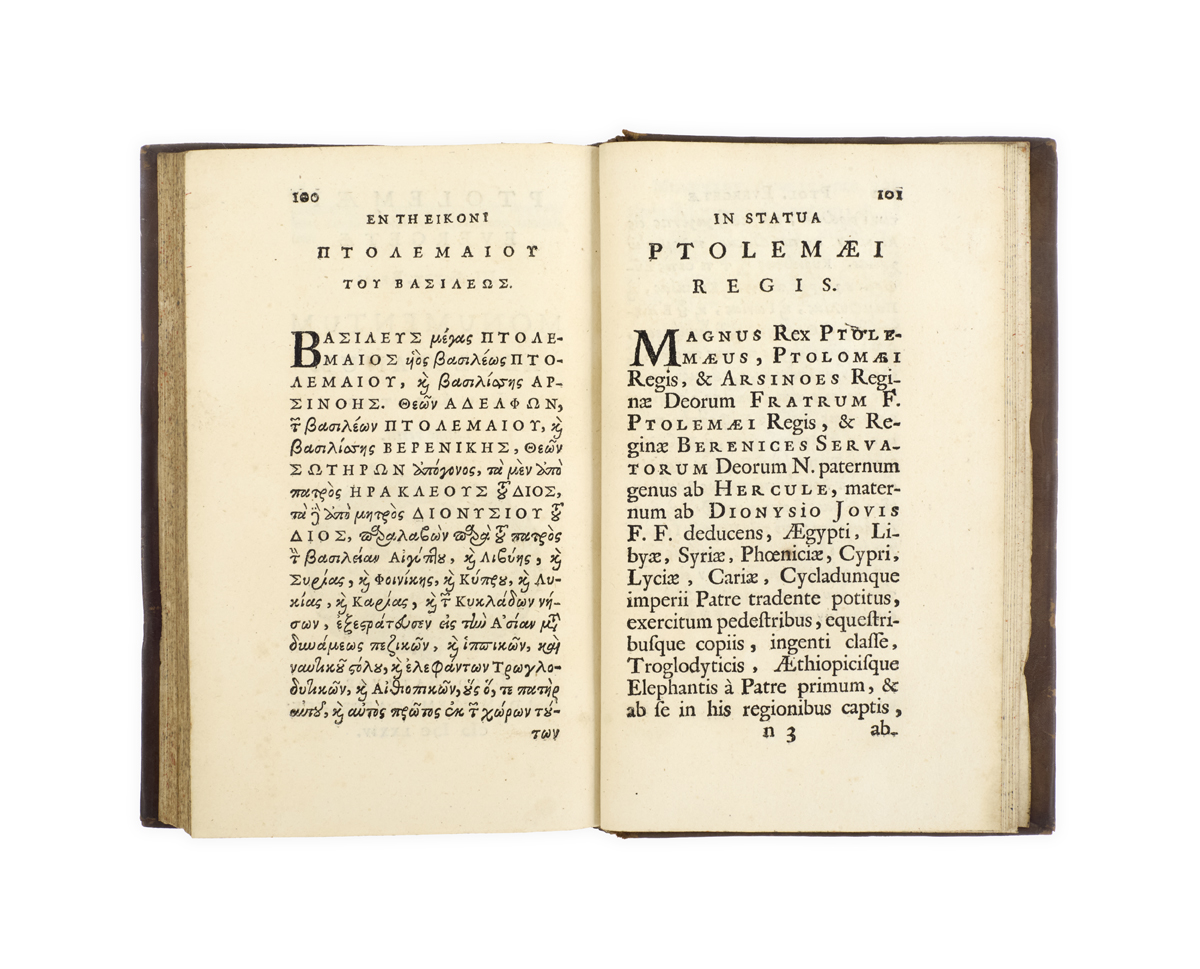
Although not mentioned on the title-page, this volume contains the Monumentum Adulitanum, recording the deeds of Ptolemy III Euergetes, with the translation by Leone Allacci. This inscription, named for Adulis, a town on the Red Sea coast of Egypt, records that elephants from this area were used in wars by Ptolemy, though it may have been copied from an inscription in Alexandria. This third part was not included in all copies and may also have been printed and issued separately: a single copy at the University of Amsterdam appears to be of the same setting except for the register.
STCN 117814164.