The Nonesuch Dante
DANTE Alighieri; Mario CASELLA, editor; H.F. Cary, translator.
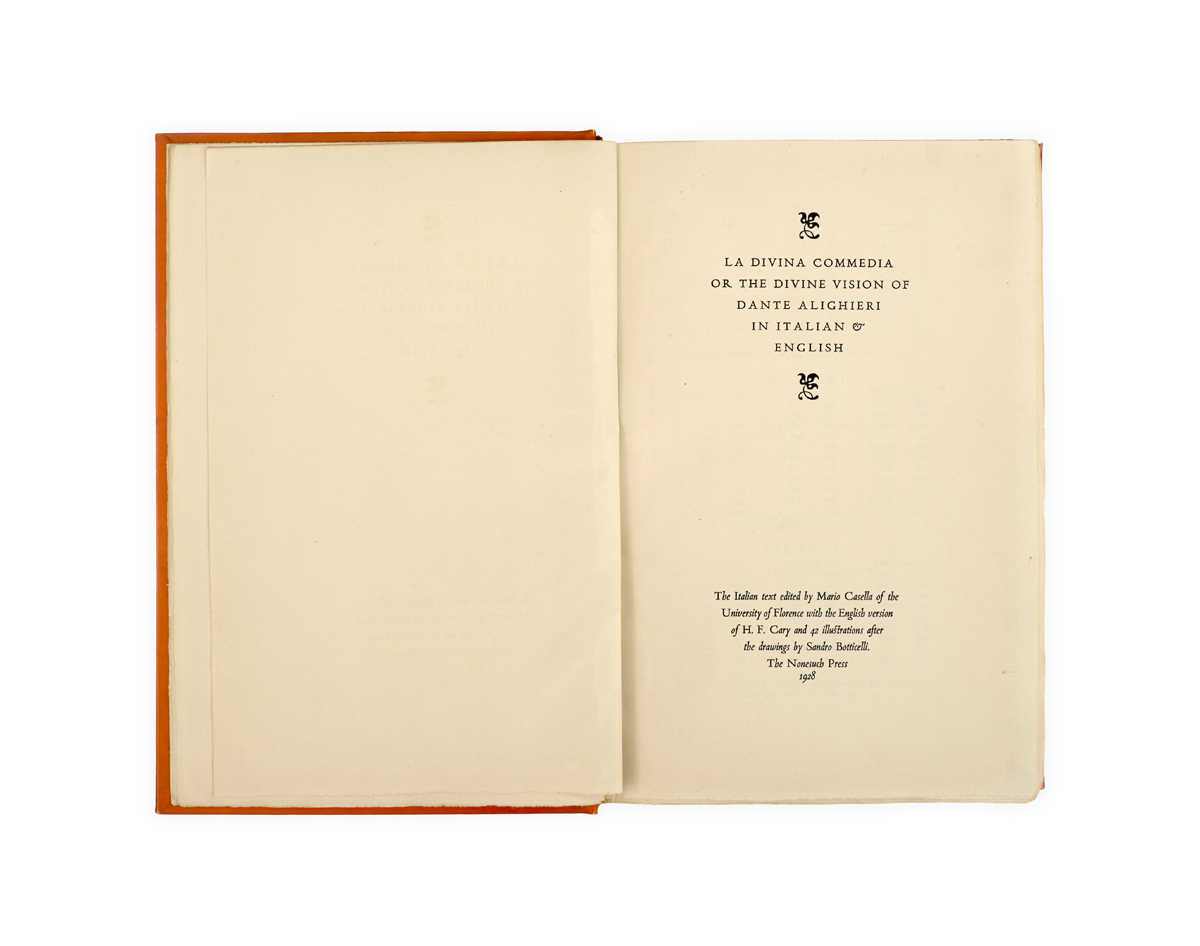
La divina commedia or the divine Vision of Dante Alighieri in Italian & English. [London], The Nonesuch Press, 1928.
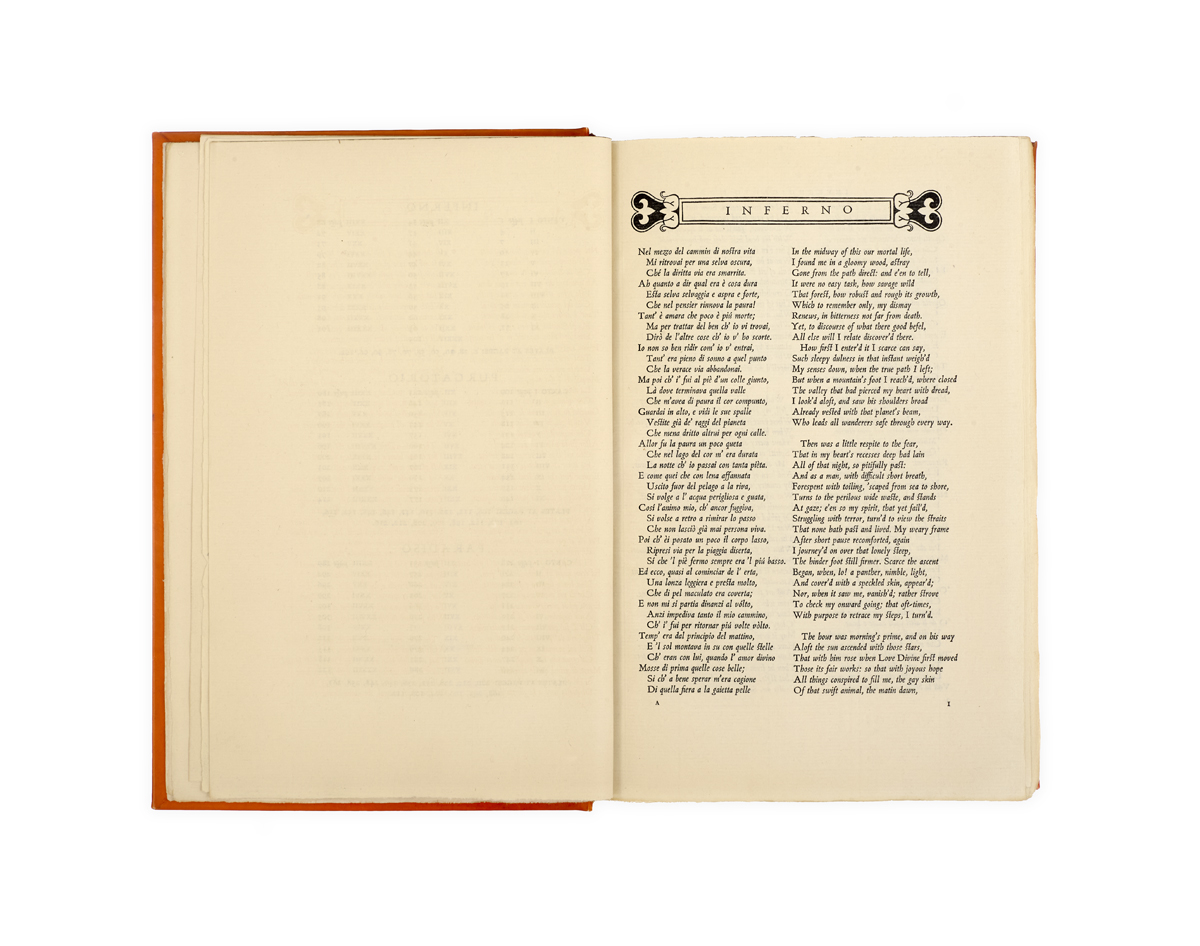
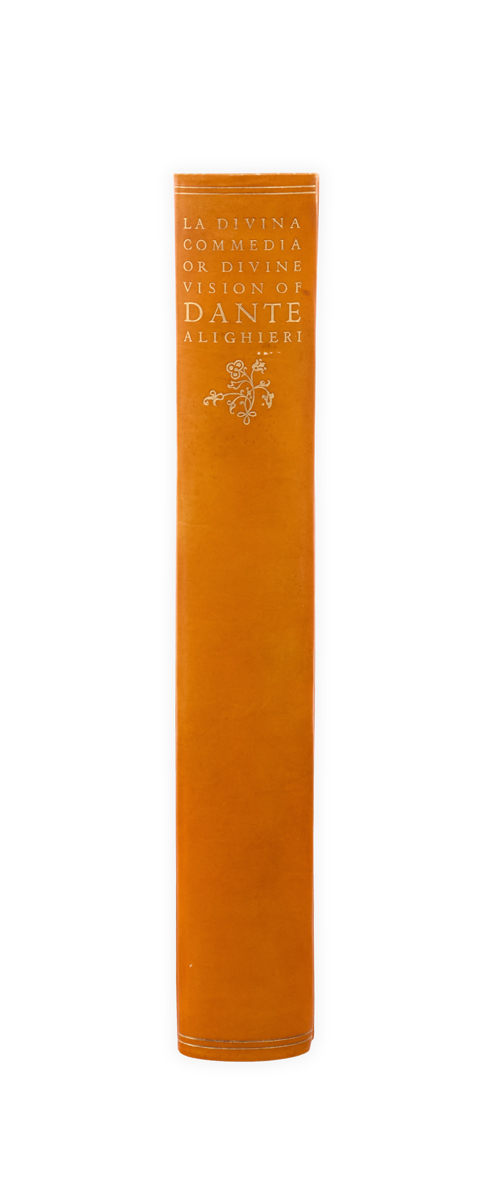
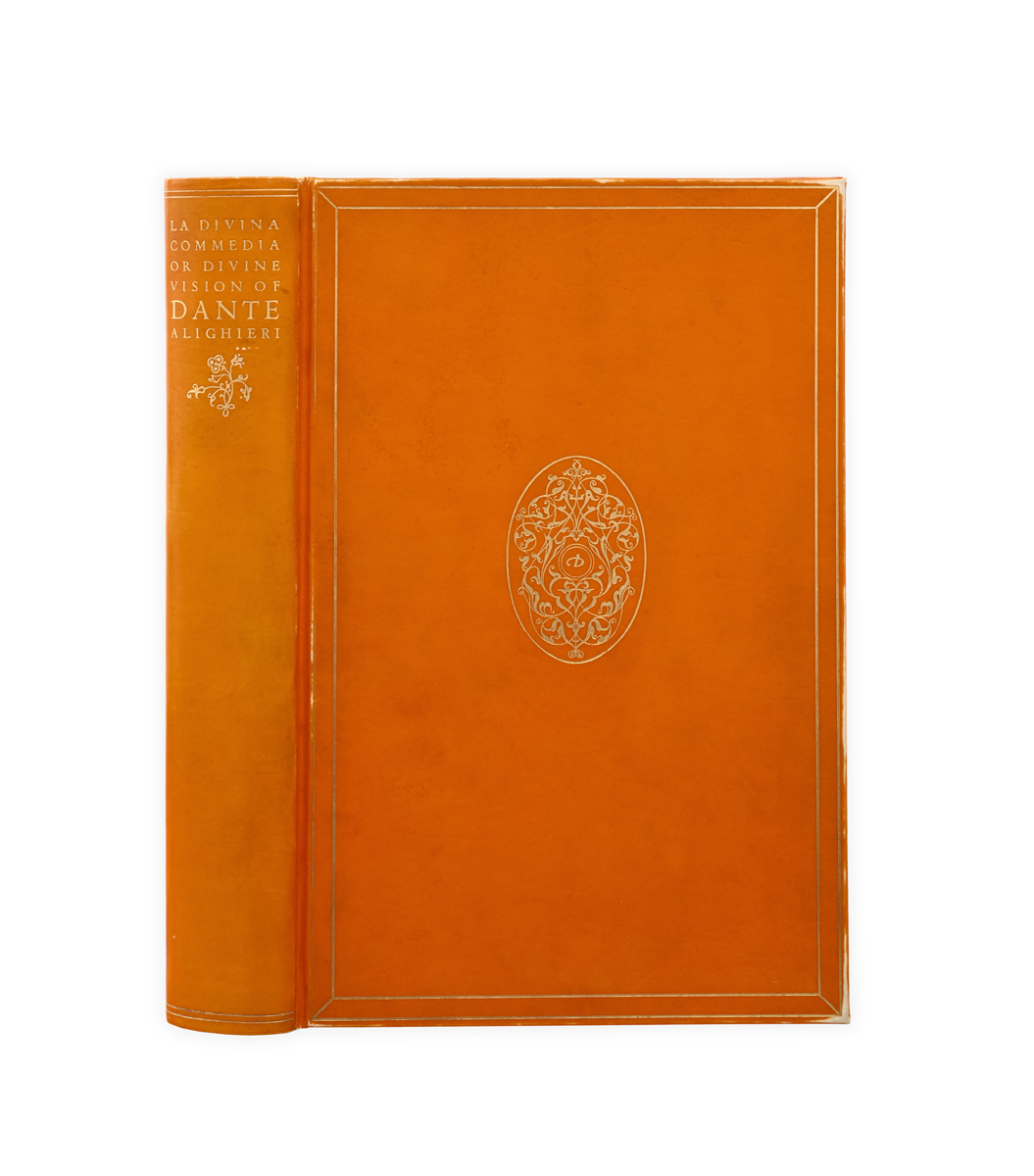
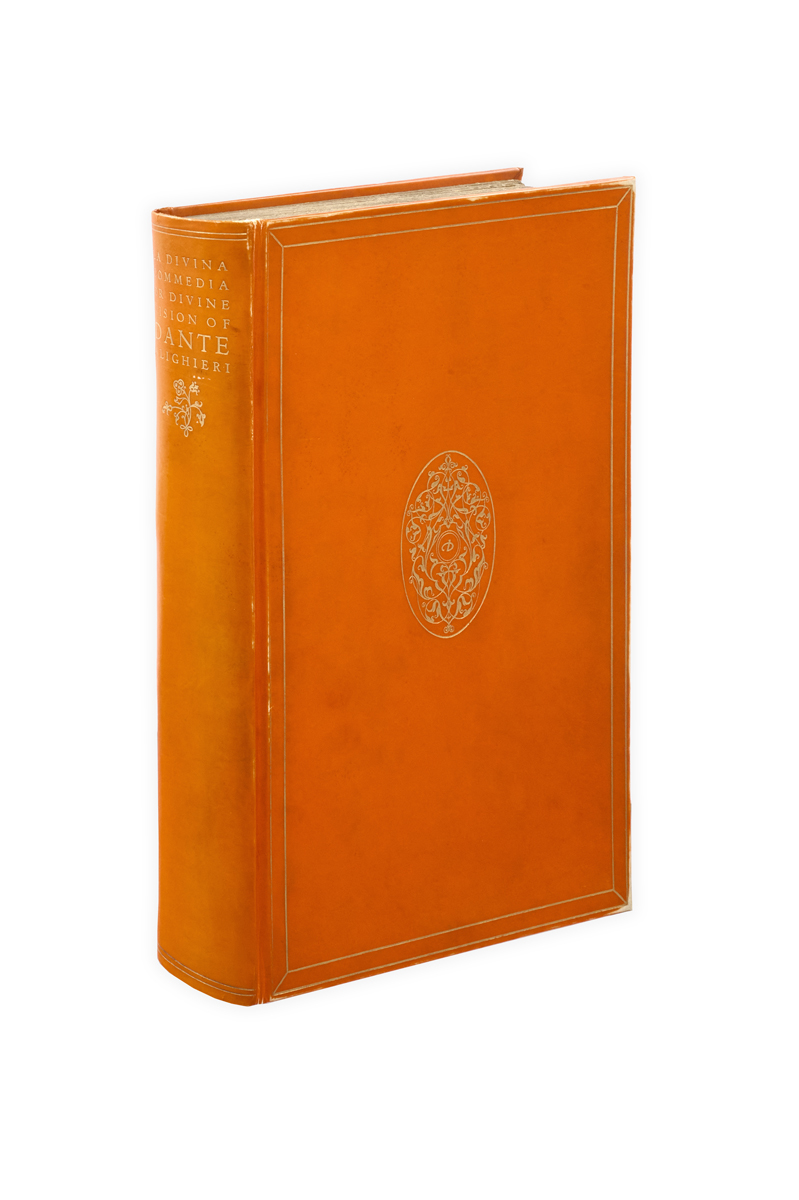
Folio in 8s, pp. [4], 324, [4], with 42 sepia collotype plates (of which 34 double-leaf) by Daniel Jacomet after Botticelli; italic letter in parallel Italian and English, on Van Gelder paper with Nonesuch watermark; small marginal tear without loss to I3; else an excellent copy, uncut and partially unopened, in the original orange vellum, gilt covers with central gilt arabesque, panelled in gilt, spine lettered directly in gilt, top-edge gilt on the rough; extremities slightly rubbed, a few very light smudges to covers; in a modern cloth slipcase.
Added to your basket:
La divina commedia or the divine Vision of Dante Alighieri in Italian & English.
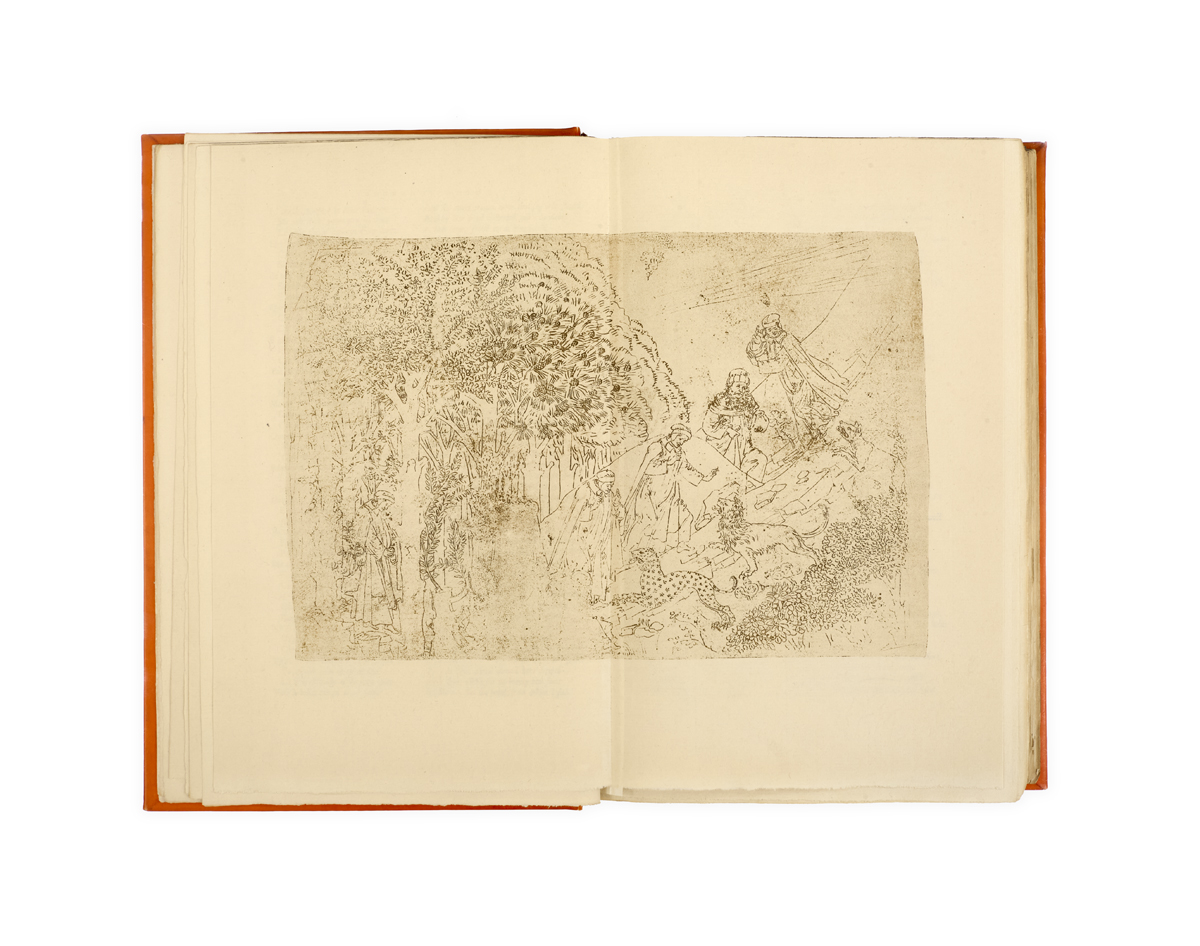
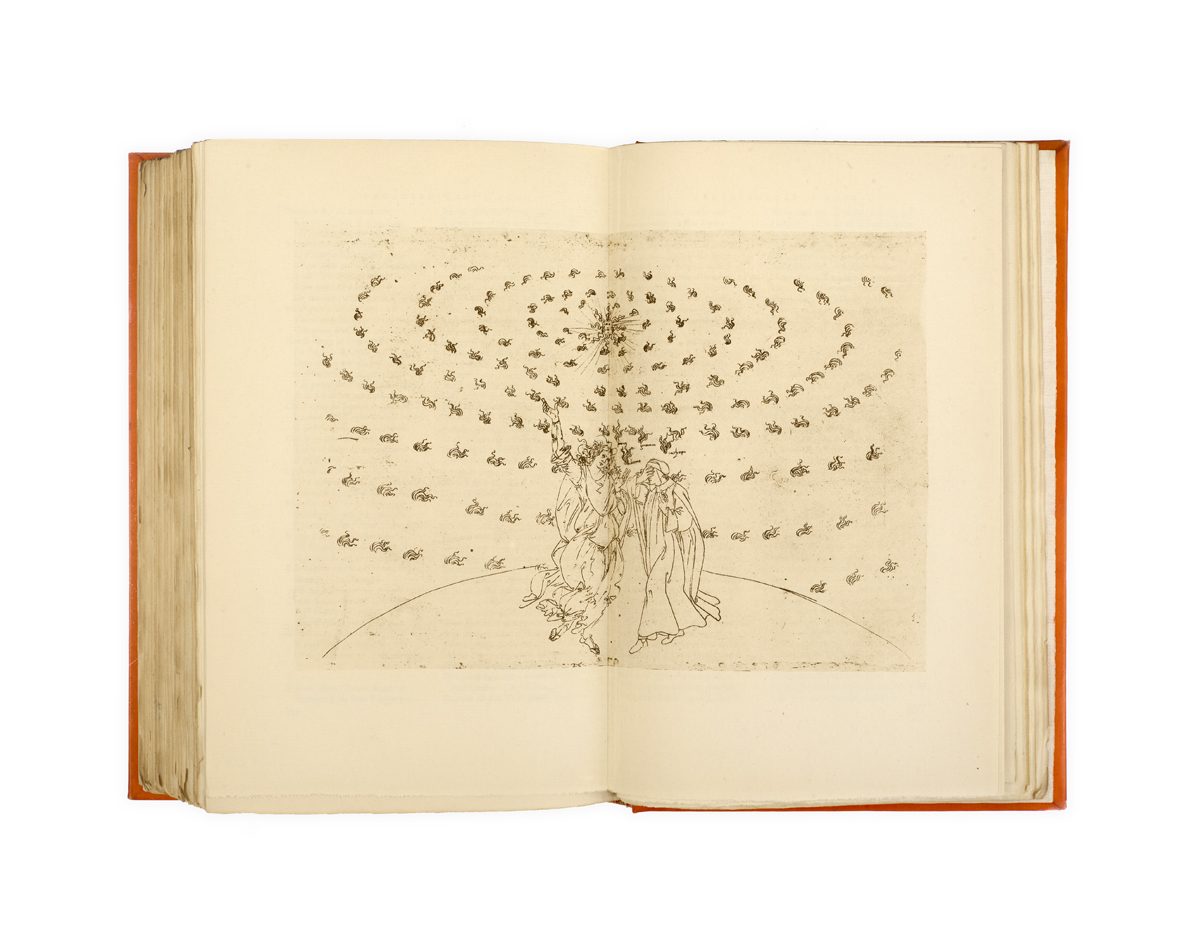
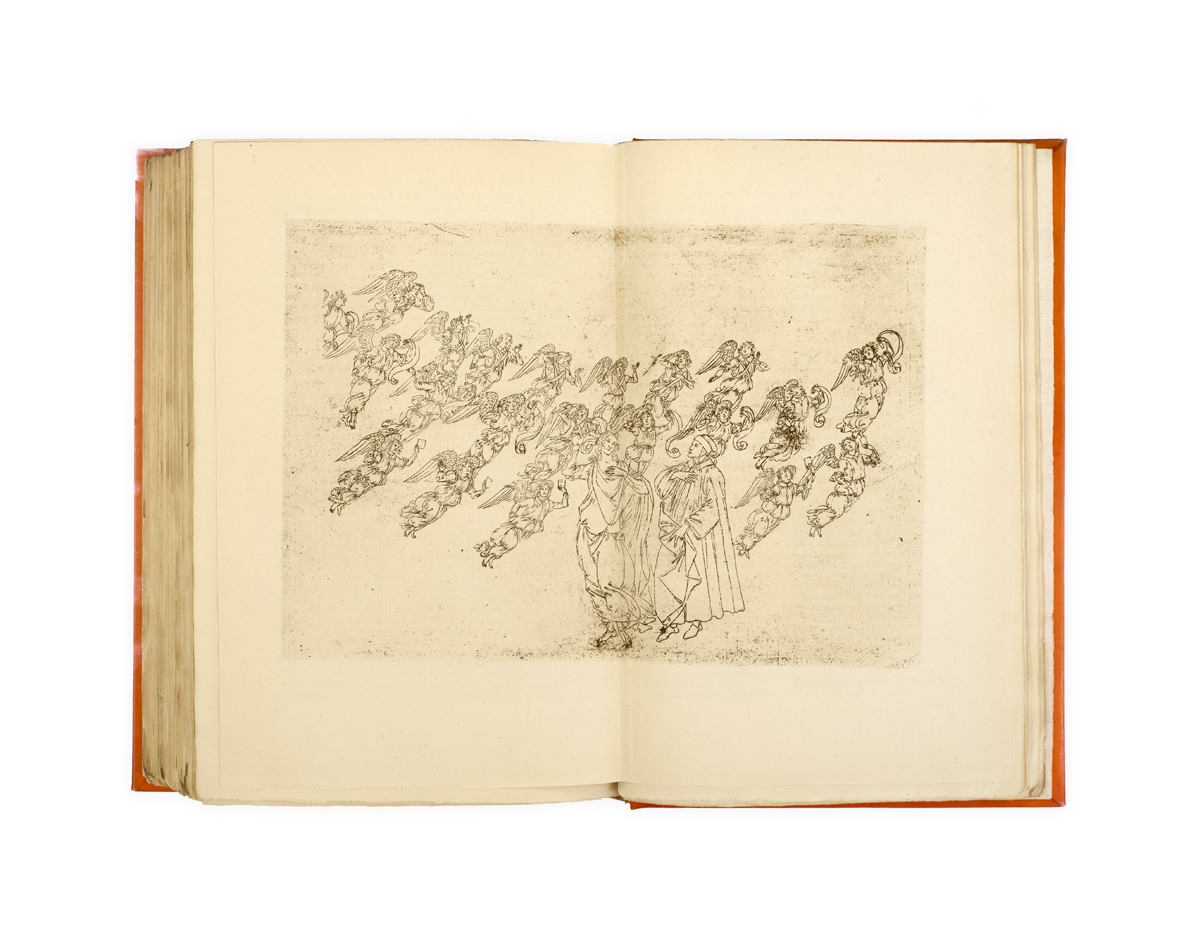
First Nonesuch numbered 1292 of 1475 copies, of Dante’s Divine Comedy in parallel Italian and English, with magnificent collotype illustrations after Botticelli, a superb copy preserving uncommonly well the brilliant but fugitive colour of the striking stained-vellum binding.
Presenting the Divine Comedy in the original alongside H.F. Cary’s English translation in blank verse, this was the Nonesuch Press’s ‘largest and most intricate volume to date’ (Dreyfus, p. 46). The Italian text is from Mario Casella’s groundbreaking edition of 1925, which contained several errata corrected specially for this edition by Casella himself. Accompanying the text are forty-two collotype illustrations after Botticelli’s silverpoint drawings of scenes from the Comedy: ‘it was the first time that the finest of them had been reproduced as illustrations to Dante’s text’ (ibid., p. 47).
The edition was published by the Nonesuch Press – established in 1922 by David Garnett, Francis Meynell, and Vera Mendel – to wide acclaim both in England and overseas, and was the most oversubscribed of all Nonesuch publications. The scholarly appeal of the revised text prompted Meynell, in his 1928 prospectus for the book, to quote a Spectator article hoping that copies would find themselves in the hands of ‘Dante scholars, not those perverse bibliophiles who thwart the holy intentions of books by locking them uncut on their jealous shelves, or worse still, to those who speculate on the financial values of such treasures! But for these last Dante has provided a place in Hell’ (ibid., p. 173).
Even within a few months of publication, however, the boards’ tendency to bow was noticed, and many copies bear this defect alongside later fading to the bright orange vellum, especially at the spine. Our copy is one of very few surviving in something close to the original condition.
Dreyfus 50; Flower 50; Ransom, p. 168.