Manual for Mothers
FOURCROY DE GUILLERVILLE, Jean-Louis de.
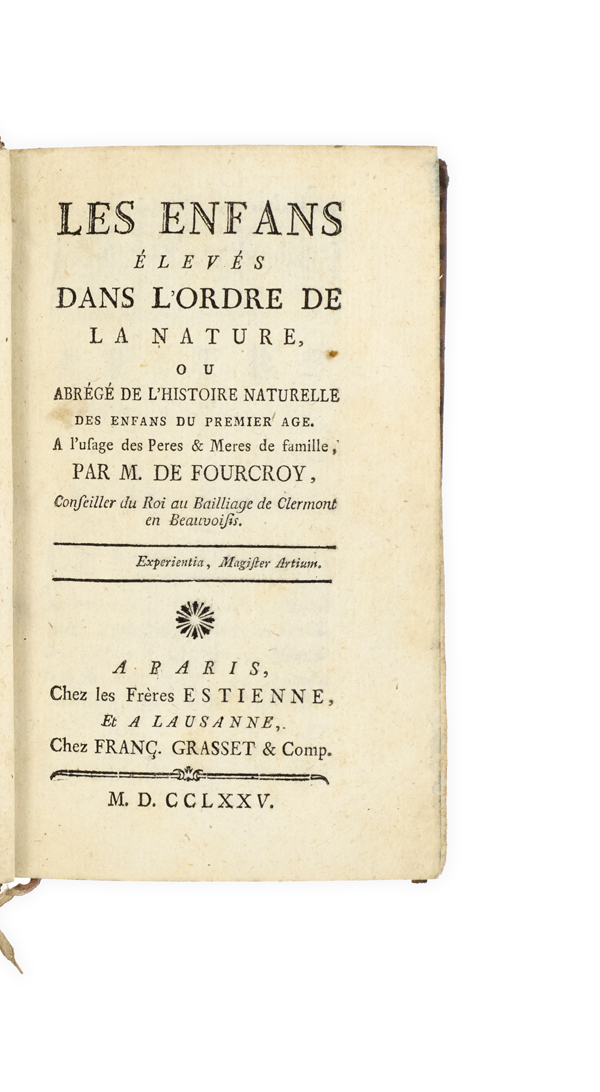
Les Enfans élevés dans l’ordre de la nature, ou abrégé de l’histoire naturelle des enfants du premier age. A l’usage des pères & mères de famille … Paris, brothers Estienne, and Lausanne, François Grasset & Comp., 1775.
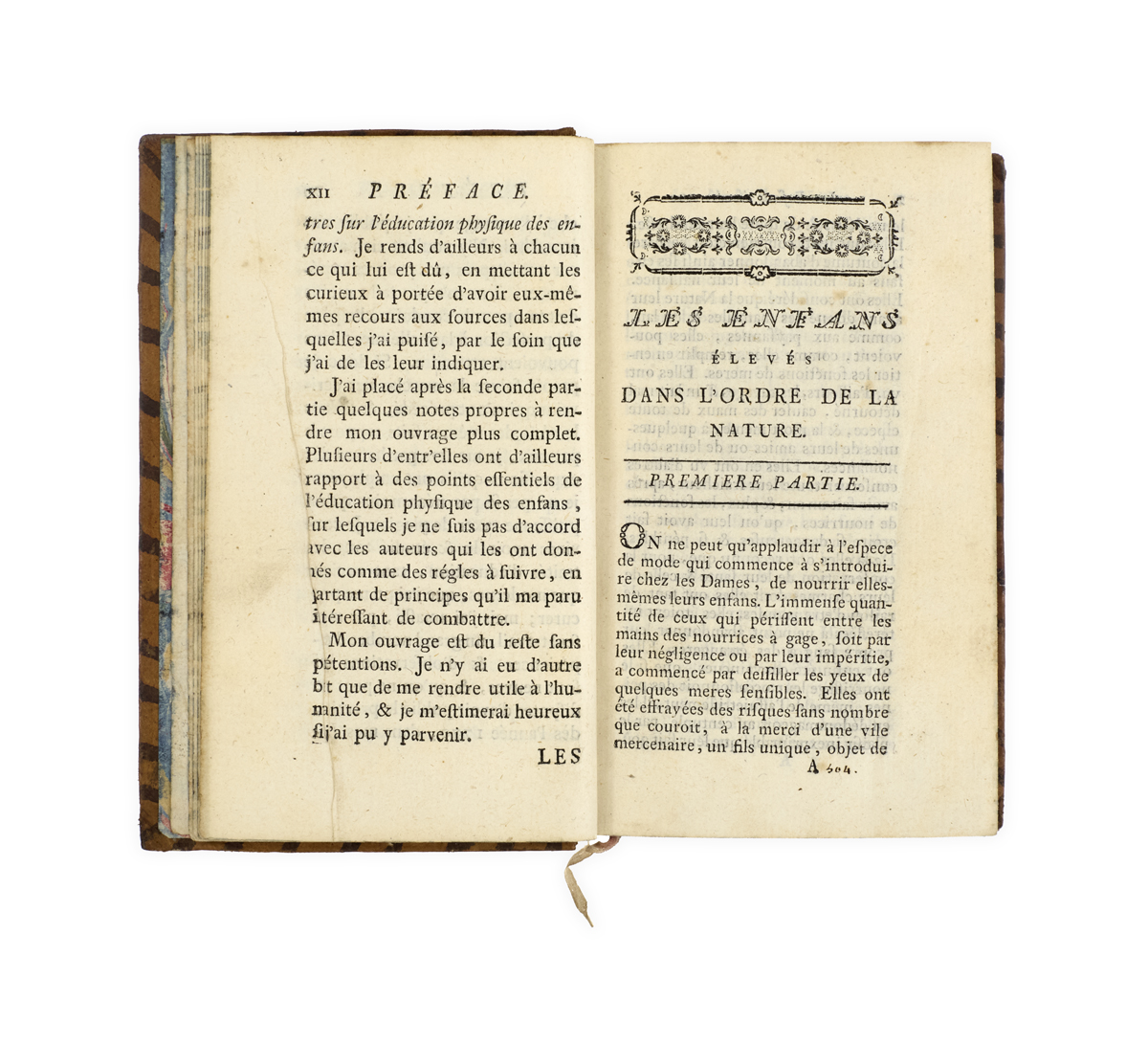
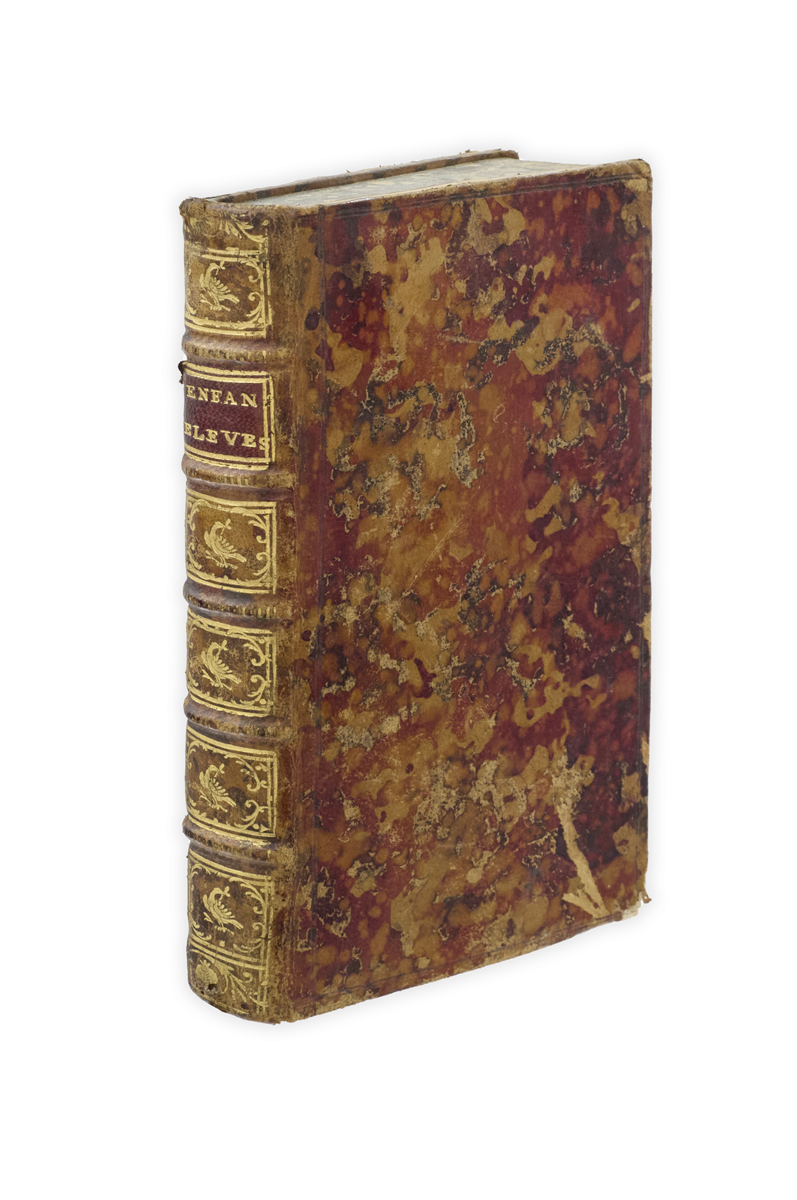
12mo, pp. xii, 286, [2 (blank)]; small typographic ornament to title-page, typographic headpieces, woodcut and typographic tailpieces; occasional light foxing, a few leaves browned, but a good copy; bound in contemporary mottled sheep, spine gilt in compartments with a dove tooled in each, gilt red morocco lettering-piece, marbled edges, marbled endpapers, pink silk place-marker; boards a little rubbed and scuffed, corners bumped, a few minute wormholes; ink inscription ‘1783’ to front free endpaper verso.
Added to your basket:
Les Enfans élevés dans l’ordre de la nature, ou abrégé de l’histoire naturelle des enfants du premier age. A l’usage des pères & mères de famille …
Second edition of Fourcroy de Guillerville’s parental advice-book, first published the previous year, with instructions for the care of infants directed particularly at mothers.
Dedicated to the ‘respectable mothers, who sacrifice yourselves to the education of your children’ (p. iii, trans.), Fourcroy de Guillerville’s book is in two parts: the first, effectively serving as a long introduction to the second part, consists of a history of the physical education of children; the second is a ‘manuel’ (p. vii), divided into chapters beginning with health advice for pregnant mothers and children in the first few days of their infancy. His more pedantic comments include a warning against feather mattresses during pregnancy, instructing mothers to dress young children as lightly as possible, and insisting that a panade (bread soup) made of white bread, water, and salt is the best food for weaning (pp. 94–96). Appended is a letter with a recipe for a balm to be applied on burns and various other wounds (tried and tested by Madame de Fourcroy).
Younger brother of the perhaps better-known military engineer Charles-René de Fourcroy de Ramecourt (1715–1791), the educationalist Jean-Louis de Fourcroy de Guillerville (1717–1799) had been an artillery officer and served in the colony of Saint-Domingue for twenty years. Following his return to France, he purchased the post of conseiller du roi in the bailiwick of Clermont-en-Beauvaisis (also known as Clermont-sur-Oise) and, after the Revolutionary district tribunal replaced the bailiwick, became a judge. His experience of Saint-Domingue is considered to have partly influenced his first publication, Lettres sur l’éducation physique des enfans (1771).
See Chiswick, The Limits of Reform in the Enlightenment: Attitudes Toward the Education of the Lower Classes in Eighteenth-Century France (2014), p.179; Popiel, ‘Making Mothers: The Advice Genre and the Domestic Ideal, 1760-1830’ in Journal of Family History 29, no. 4 (2004), pp. 339-350.